Catch dust where the blade throws it
Start at the factory port, preserve airflow, and add a safe hood where the plume escapes. Good control supports—but never replaces—the safe cutting sequence.
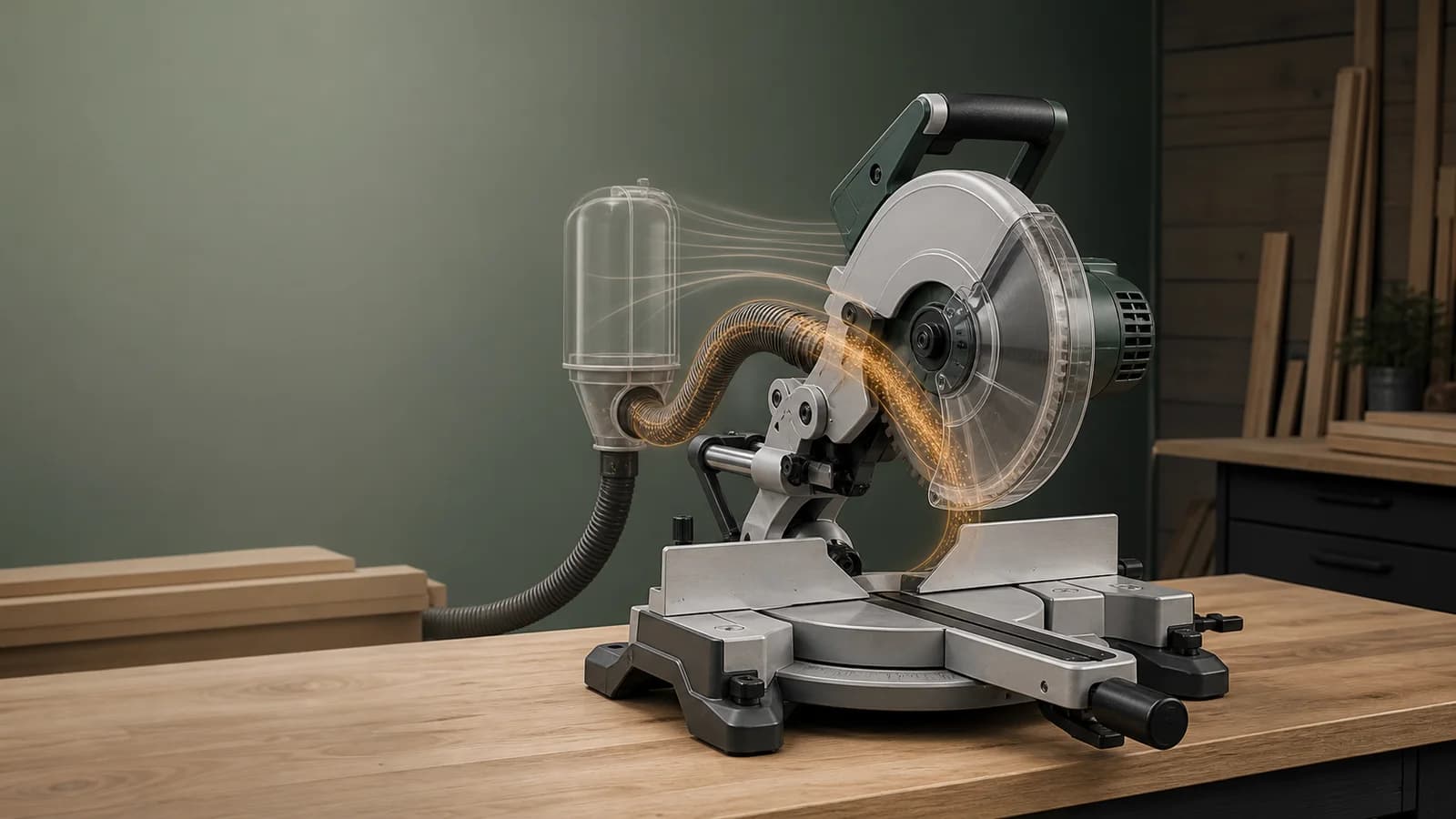
Capture is an airflow problem, not an accessory count.
The port, adapter, hose, filter, collector, enclosure opening, and moving saw form one system. A bottleneck or collision in any part can defeat the rest.
- Manual-first safety
- Specific setup decisions
- No invented testing
Choose the question that matches your setup.
Each guide resolves one distinct decision, then links naturally to the next check in the same workflow.
Miter saw dust hood: capture the plume without blocking the saw
Choose and position a miter saw dust hood using source capture, blade travel, airflow, enclosure openings, hose routing, access, fire safety, and testing.
Read the guide 02Miter saw dust bag: useful for chips, limited for fine dust
Understand miter saw dust bag fit, airflow, emptying, inspection, fine-dust limits, cleaning, replacement, and when to connect suitable extraction.
Read the guide 03Miter saw dust collection adapter: connect without choking airflow
Connect a miter saw dust port to a hose by measuring true diameters, preserving airflow, supporting hose weight, checking travel, sealing leaks, and testing capture.
Read the guide 04DIY miter saw dust hood: design from the motion envelope
Plan a DIY miter saw dust hood by mapping travel, locating the dust plume, sizing openings, routing extraction, choosing materials, and testing safely.
Read the guide 05Shop vac vs dust collector for a miter saw
Compare a shop vacuum and dust collector for a miter saw by pressure, airflow, port size, hose resistance, filtration, duty cycle, noise, and hood design.
Read the guide