Miter saw dust bag: useful for chips, limited for fine dust
A factory bag is compact and keeps some debris off the bench, but its small filter area and passive airflow rarely equal a compatible powered extraction system.
How this guide has been updated
- Guidance published with safety and manufacturer references.
Share this page
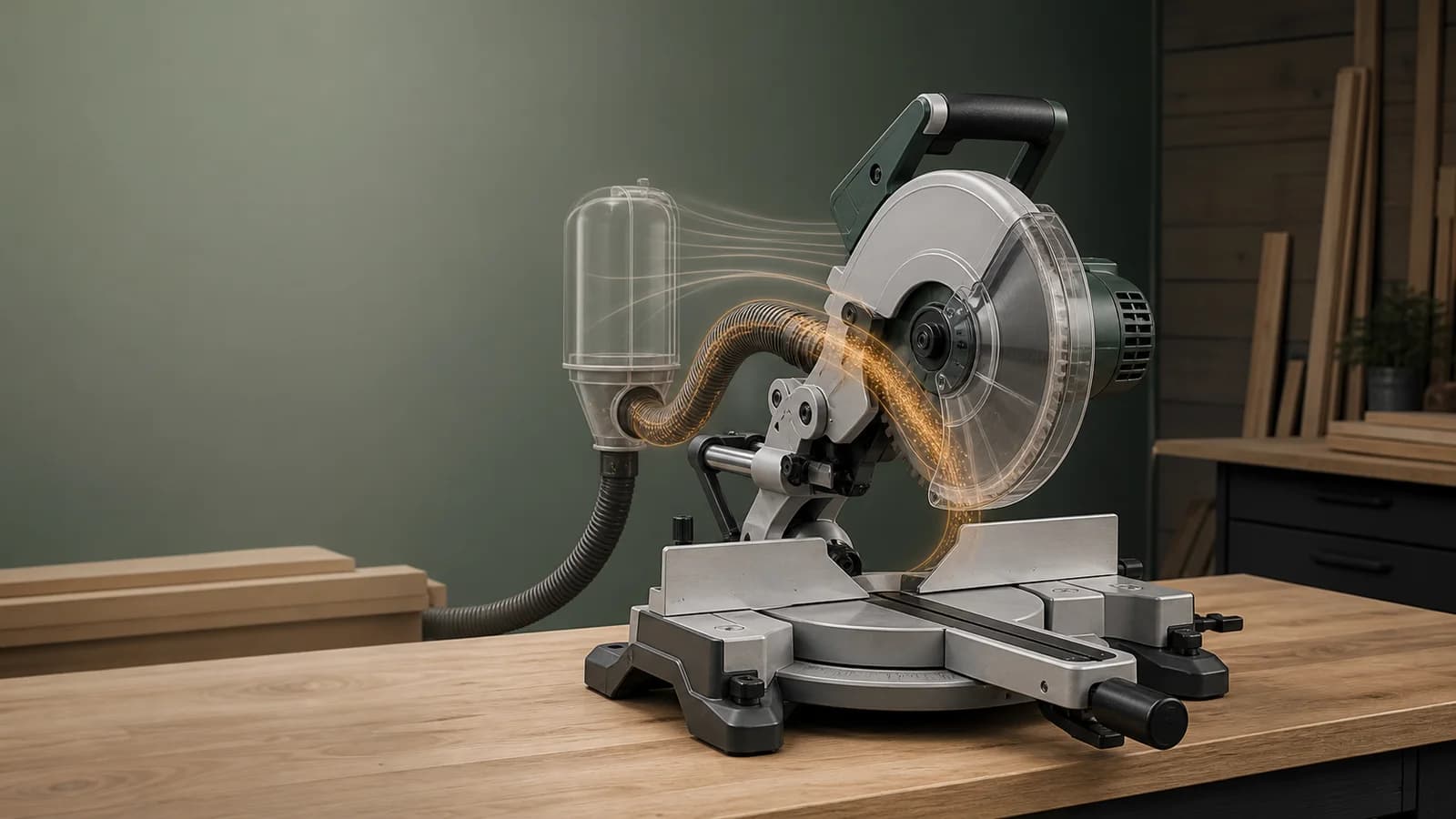
The blade supplies the airflow; the bag receives the plume.
On many miter saws, the rotating blade and guard channel push some chips through the rear port. The bag must pass air while retaining debris. As pores load or the bag fills, resistance rises and more dust can escape around the guard and port.
This is why an empty bag may appear effective for a few cuts and then decline. The bag is best understood as a compact chip and coarse-dust control, not proof that fine airborne exposure is controlled.
Seal the intended connection without stressing it.
Use the saw’s listed bag or an approved replacement with the correct collar, clip, zipper, seam construction, and heat or static properties. A loose universal bag can leak at the highest-velocity point, while an overly tight adapter can crack a plastic port.
Orient the bag so it cannot touch rails, the motor, the blade path, hot surfaces, or the work at any angle. Move the disconnected saw through its full range before reconnecting power.
Empty and inspect before the bag becomes a plug.
Follow the manufacturer’s fill limit and emptying method. Disconnect power, allow dust to settle, remove the bag carefully, and avoid squeezing or shaking fine dust into the room. Dispose of material under local and workplace rules.
Inspect seams, closure, collar, and fabric for holes, caking, moisture, or damage. Clean only by an approved method; compressed air can aerosolize dust and may damage filter media.
Frequent indoor cutting usually needs powered source capture.
If dust escapes visibly, settles outside the immediate station, or the bag clogs quickly, evaluate the manufacturer’s extractor connection. Match the port and hose without narrowing the path unnecessarily, and maintain the extractor filter and container.
Powered extraction is still only one layer. Pair it with general ventilation, dust-safe housekeeping, appropriate personal protection, and an exposure-control plan where occupational rules apply.
Questions readers ask before they start
Do miter saw dust bags work?
They can catch some chips and dust, especially when empty and correctly fitted, but generally provide less control than suitable powered extraction.
Can I wash a miter saw dust bag?
Only if the manufacturer permits it. Washing can damage coatings, seams, or filtration and a damp bag can clog.
Why does dust blow around the bag connection?
Check fit, tears, fill level, a blocked port, guard channel, and whether the bag interferes with saw movement.
Check the exact saw manual before changing or adjusting anything.
This guidance combines NIOSH engineering-control principles with the manufacturer instructions for the saw connection. It does not replace exposure assessment or workplace rules.