How to choose a miter saw without overbuying
The right miter saw is not automatically the biggest, newest, or most expensive one. Start with what you cut, how wide and tall it is, how often you repeat the cut, and whether the saw needs to move.
Share this page
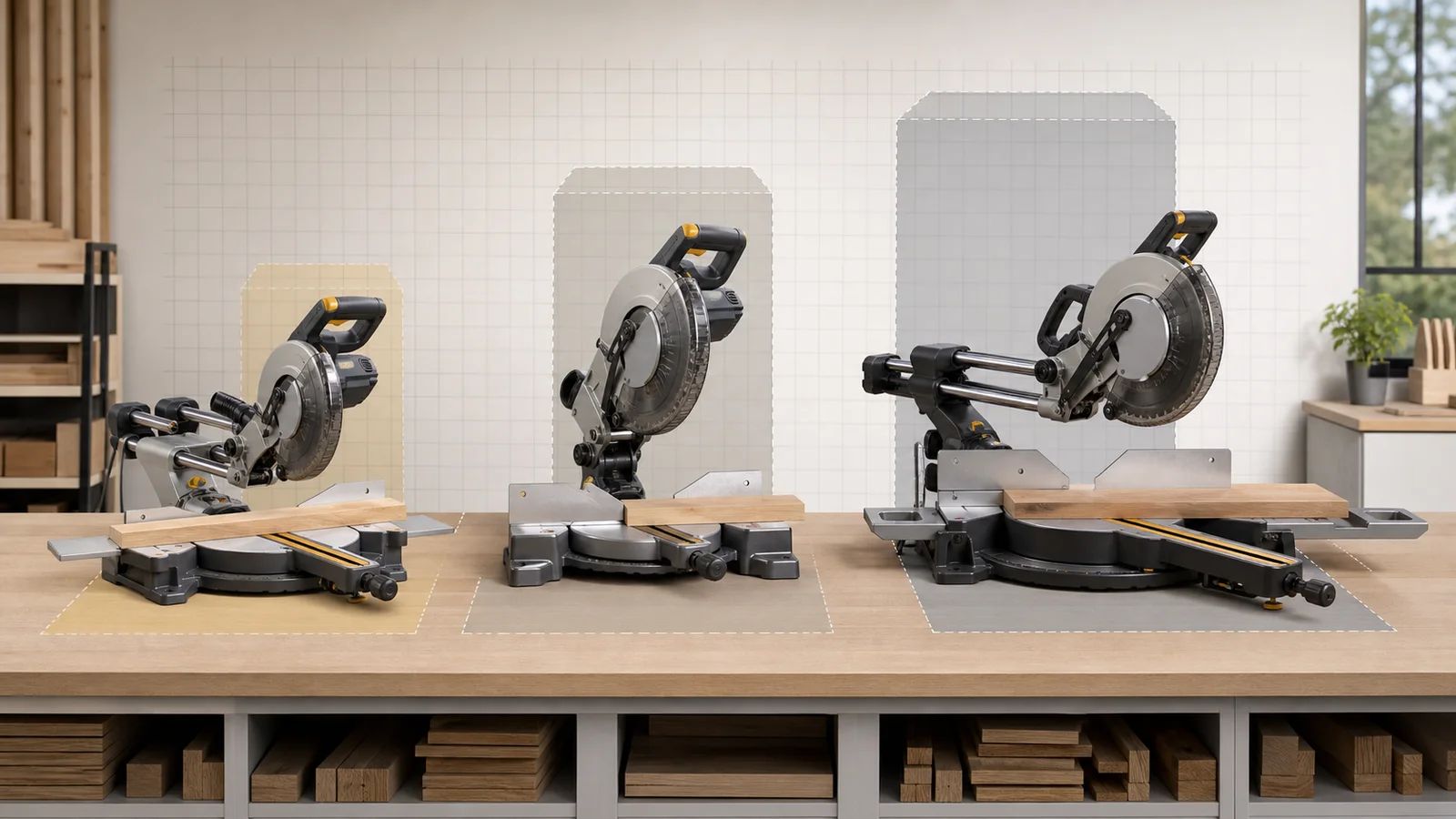
Start with capacity, then repeatability, then portability.
A miter saw is the right category when your work is mostly crosscuts, trim, molding, deck boards, framing lengths, and angles across stationary stock. It is usually the wrong category for long rip cuts, full sheet goods, or cutting materials that the saw and blade are not designed to handle.
Simple rule: if the board can sit flat against a fence and you need the same crosscut or angle repeatedly, a miter saw belongs on the shortlist. If the cut runs along the board or across a full panel, compare against a table saw or circular saw first.
The six decisions that matter before model numbers.
Brand and price matter later. First, decide what the saw must physically clear, how often you repeat angled cuts, and whether it will stay in one place.
Trim, molding, deck boards, framing lengths, repeated crosscuts, and controlled angles.
A miter saw is strongest when the material sits still and the cut repeats cleanly.
10-inch is often enough for smaller trim and portability; 12-inch helps with taller/wider stock.
Bigger blades can add capacity, but also weight, cost, and bulk.
Choose sliding capacity when you cut wider boards or need more crosscut reach.
A non-sliding saw can be simpler and lighter, but it limits board width.
Single bevel is fine for occasional angled cuts; dual bevel helps when trim work repeats.
Dual bevel reduces flipping long or delicate material, especially on molding workflows.
Jobsite work rewards lower weight, compact stands, and easy carrying more than maximum capacity.
The best saw on paper is not useful if it is too awkward to set up consistently.
Look for stable fences, useful detents, clear scales, and controls you can lock without shifting.
Repeatability matters more than an impressive feature list if your cuts need to match.
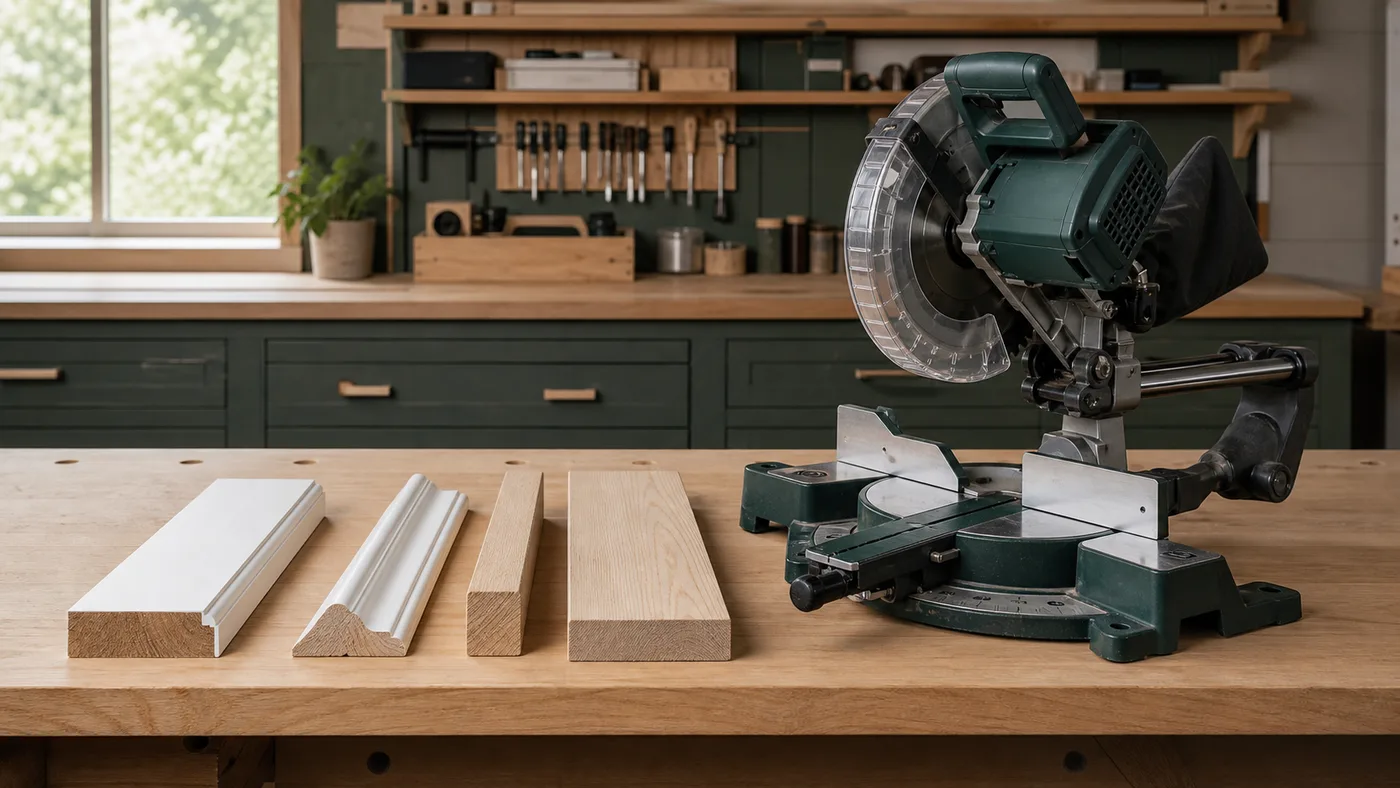
Different projects reward different trade-offs.
A miter saw that feels perfect for crown molding may be overkill for occasional baseboards. A lightweight saw that is easy on a jobsite may not be the best choice for wide stock in a fixed workshop. Let the project choose the feature priority.
Most trim and DIY work
A compound miter saw with enough height capacity for your baseboards and casing.
Best saws for baseboardsCrown molding
Often a sliding compound saw, with dual bevel if you want fewer flips and a flatter workflow.
Best saws for crown moldingPicture frames
A saw that can be squared carefully, paired with a fine blade and repeatable stop-block setup.
Best saws for picture framingJobsites
A portable saw and stand combination that is easy to move, support, and use safely every day.
Jobsite guideCompare the job before you commit to a miter saw.
A miter saw is excellent at its lane, but it is not the only first saw. If your work points toward ripping, sheet goods, or metal cut-off work, make that comparison before buying.
Table saw vs miter saw
Use this if your decision is really crosscuts and angles versus rip cuts and stock sizing.
Read comparison 02Circular saw vs miter saw
Use this if your decision is portable sheet-good cuts versus repeatable board cuts.
Read comparison 03Chop saw vs miter saw
Use this if you are unsure where woodworking ends and metal cut-off work begins.
Read comparisonFour buying mistakes that cost money without improving cuts.
Buying the biggest saw automatically
Capacity matters only if it matches your actual stock. Bigger saws can be heavier, harder to move, and more expensive.
Ignoring support and stand setup
Long boards, trim, and crown molding need stable support level with the saw table. The saw alone is not the whole setup.
Treating every project like a product roundup
A crown molding buyer, baseboard installer, and jobsite framer may need different trade-offs.
Skipping the manual until something feels wrong
Controls, bevel limits, guard behavior, blade requirements, and no-hands zones depend on the exact model.
Miter saw buying FAQ
What size miter saw should I buy?
Start with the material you cut most often. A 10-inch saw can be enough for many trim and DIY jobs, while a 12-inch saw usually adds capacity for taller or wider stock. Do not buy size alone; check the actual cut capacities for your material.
Do I need a sliding miter saw?
Choose a sliding saw if you often cut wider boards or need more crosscut reach. If your work is mostly narrow trim and portability matters, a non-sliding saw may be simpler and easier to move.
Is dual bevel worth it?
Dual bevel is most useful when you do repeated trim or molding work and want to avoid flipping long or delicate pieces. For occasional square cuts and simple angles, single bevel may be enough.
Should I buy a miter saw before a table saw or circular saw?
Buy the saw that fits your first projects. Miter saws are strong for repeatable board cuts and angles. Table saws are better for ripping and stock sizing. Circular saws are better for portable cuts and sheet goods.
Specs and safety claims checked against primary sources.
We checked this buying framework against OSHA miter saw guidance and current manufacturer pages for common 12-inch sliding miter saw examples. Specific model recommendations should still be checked against the exact manual and product page before publishing.