Table saw vs miter saw: which one should you buy first?
Choose a miter saw when you mostly cut boards to length; our miter saw guide covers trim, molding, and angles. Choose a table saw when you need to rip boards lengthwise, size stock, or prepare repeatable widths in a workshop.
Share this page
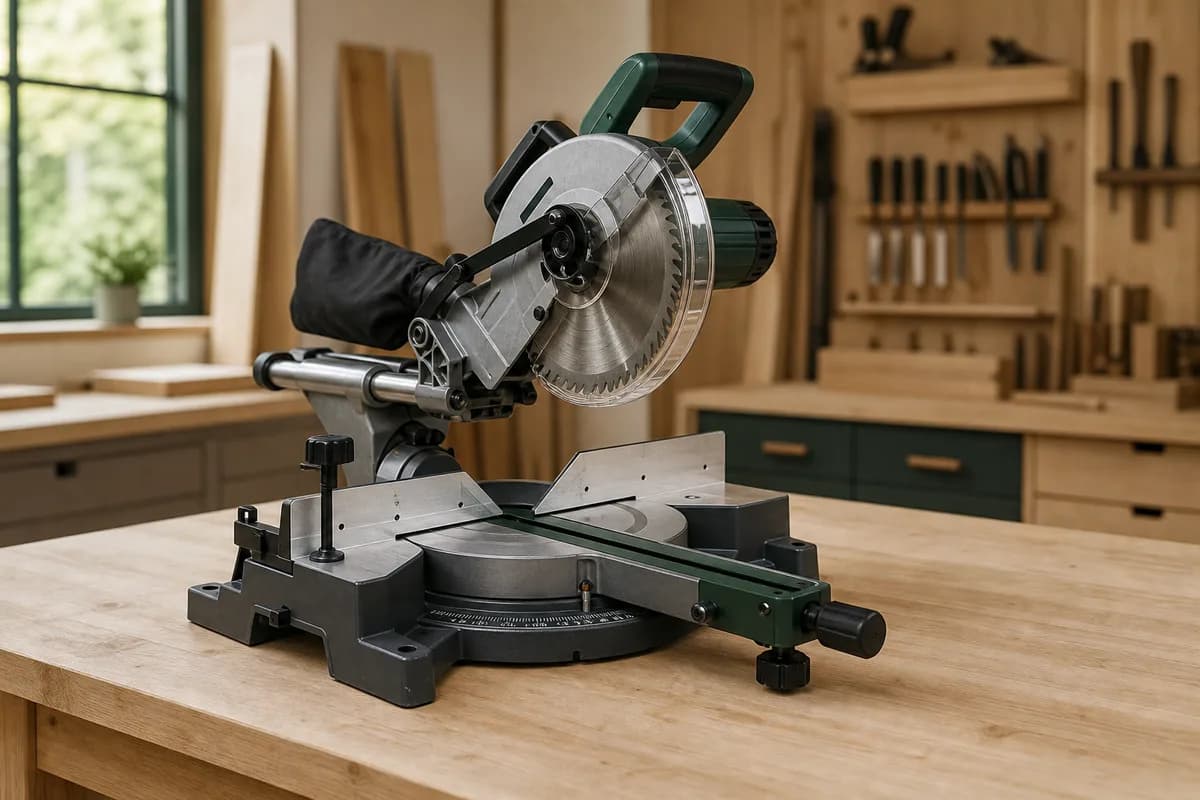
A miter saw crosscuts. A table saw sizes stock.
A miter saw is usually the cleaner answer for trim, repeated lengths, and angled cuts across a board. A table saw is the stronger answer when you need to rip boards, make repeated width cuts, or build a workflow around stock preparation. If you are choosing your first saw, name your next three projects before choosing the machine.
Miter saw
Best when the board stays still and you want repeatable cuts across its width: baseboards, casing, crown molding, deck boards, and common framing cuts.
Open miter saw guideTable saw
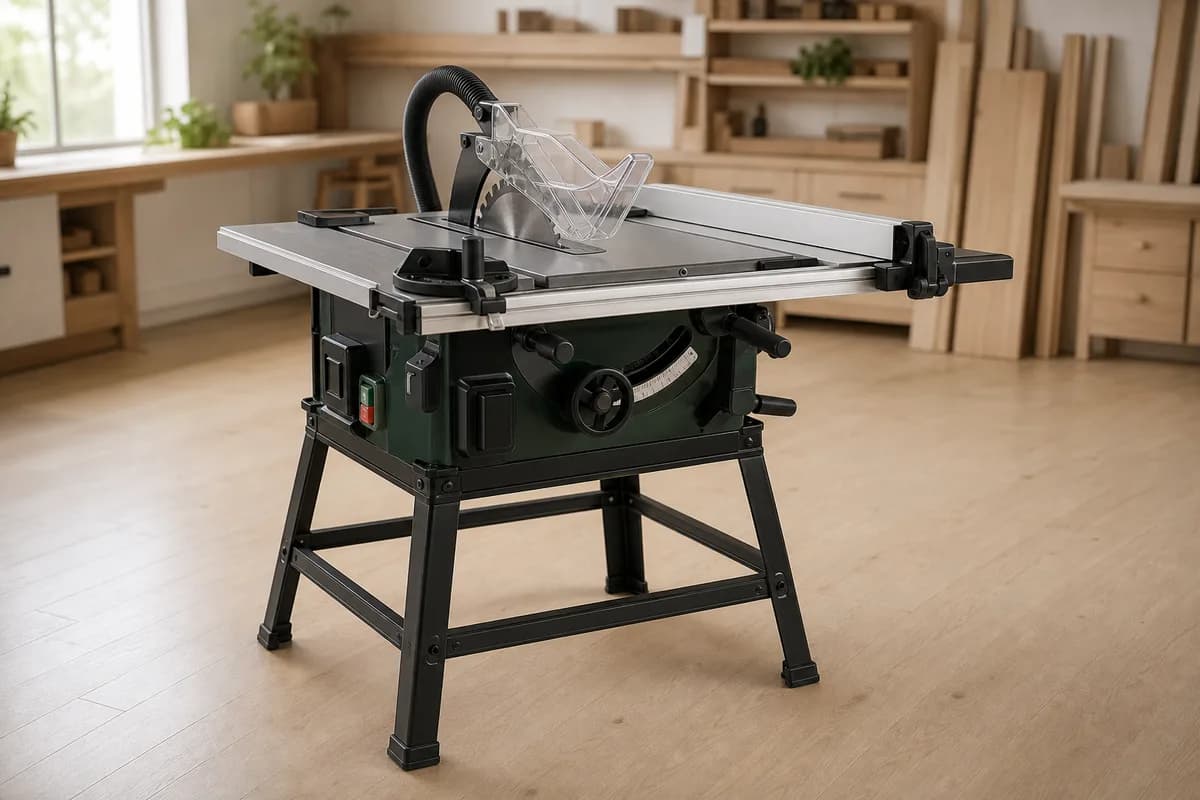
Best when the material moves through the blade and you need consistent widths, long rip cuts, or a more capable fixed workshop setup.
Open table saw guideThe real difference is how the workpiece moves.
A miter saw brings the cutter to stationary material. A table saw asks you to control the material as it passes the blade. That difference changes the cut type, space requirement, support setup, and safety habits.
Cuts across the width of stationary stock as the blade comes down into the workpiece.
Cuts along or through stock as the workpiece is fed past a fixed blade in the table.
Repeatable crosscuts, trim, molding, framing lengths, and miter or bevel angles.
Rip cuts, stock sizing, repeated width cuts, sheet-good breakdown with support, and workshop throughput.
The board stays against a fence and table; long stock needs side support.
The operator controls the feed path, fence alignment, outfeed support, and kickback risk.
Can work as a compact cut station if long boards are supported.
Needs more infeed, outfeed, side clearance, and disciplined material handling.
Clean repeated lengths and visible angle joints.
Consistent widths, straight rips, and repeatable stock preparation.
Trying to rip boards or process sheet goods on a tool made for crosscuts.
Using it casually without enough support, guarding, push sticks, or feed control.
Choose a miter saw if your projects are mostly boards cut to length.
For a lot of home projects, the first problem is not ripping sheets into cabinet parts. It is cutting boards cleanly and repeatedly to length. That is where a miter saw earns its space.
- You mostly cut trim, baseboards, crown molding, framing lumber to length, or repeated crosscuts.
- You need common angles, bevels, or compound cuts more often than long rip cuts.
- Your workspace is small but you can support long boards on both sides of the saw.
- You want a more natural first saw for many home-improvement and trim projects.
Choose a table saw if you need controlled cuts along the board.
A table saw becomes the better buy when you need repeatable widths and a fixed workflow for stock preparation. It also asks more from your workspace: stable footing, clear infeed and outfeed, guards, push sticks, and attention to kickback.
- You need to rip boards lengthwise or make repeated width cuts.
- You prepare stock for cabinets, furniture parts, shelving, or workshop projects.
- You have enough infeed and outfeed space to control the material safely.
- You are ready to manage blade guards, riving knife/splitter setup, push sticks, and fence alignment.
Four mistakes that lead to the wrong first saw.
Calling one tool “more versatile” without naming the cut
A table saw is more capable for ripping and stock prep. A miter saw is more direct for repeatable crosscuts and trim angles.
Buying a table saw without space around it
A table saw needs room before, after, and beside the blade path. Without support, large stock becomes harder to control.
Using a miter saw as a rip-cut shortcut
Miter saws are not designed for long cuts along the board. Choose a table saw, circular saw with guide, or track saw approach instead.
Skipping safety accessories because the cut looks simple
Table saw work can involve kickback and blade contact hazards; miter saw work still requires guards, clamps, and clear hands.
Table saw vs miter saw FAQ
Should I buy a table saw or miter saw first?
For trim, framing cuts, deck boards, and common home projects, a miter saw is often the easier first saw. For furniture, cabinets, repeated rip cuts, and stock sizing, a table saw becomes more important.
Can a table saw do miter saw cuts?
A table saw can crosscut and cut angles with the right sled, miter gauge, or jig, but it is not as simple as lowering a miter saw onto supported stock. For long trim and repeatable jobsite crosscuts, the miter saw is usually more convenient.
Can a miter saw replace a table saw?
Not if you need rip cuts, repeated board widths, or stock sizing. A miter saw cuts across stock; it is not a table saw substitute for feeding material along the blade.
Which saw is safer for beginners?
Neither is automatically safe. A miter saw can feel simpler because the material stays still, but it still needs a guard, stable support, clear hands, and a complete blade stop. A table saw requires especially careful feed control, guarding, and kickback awareness.
Source-checked safety and tool-role guidance.
We checked this comparison against OSHA machine-guarding guidance for table saws and miter saws, plus DeWalt documentation for a common jobsite table saw. The page stays conservative because guards, riving knives, push sticks, blade choice, and safe material handling depend on the exact model.