Circular saw vs miter saw: which one should you choose?
Choose a circular saw when the saw needs to travel through large or hard-to-move material. Choose a miter saw when the material can come to a cut station; the miter saw guide covers that setup when you need repeatable crosscuts, trim cuts, or angles.
Share this page
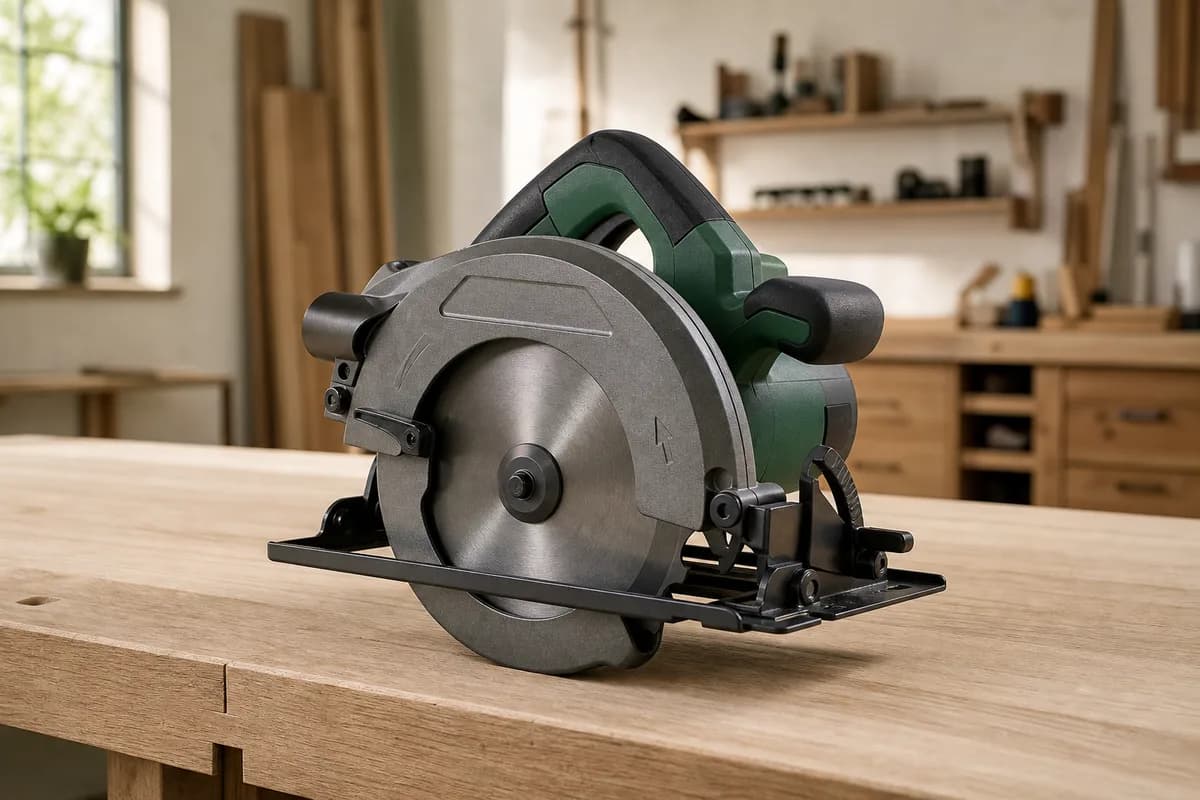
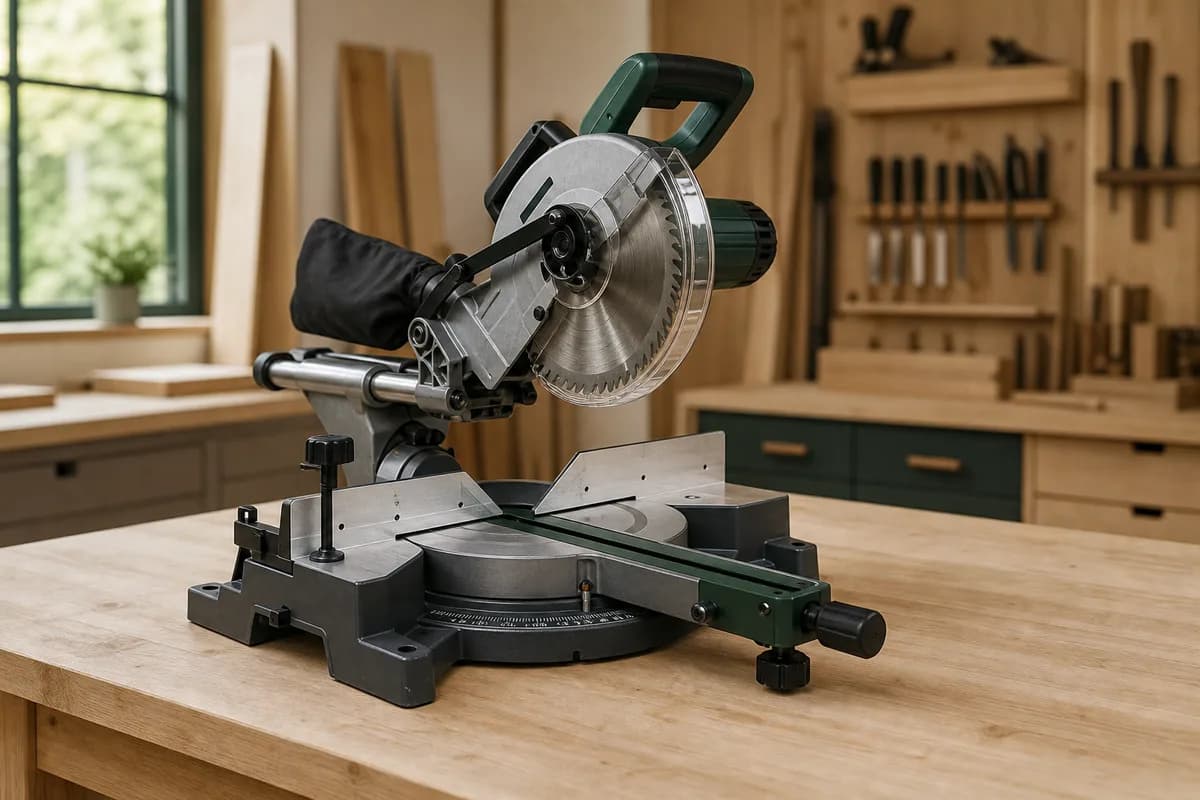
A circular saw moves through the work. A miter saw brings the blade to the work.
The difference sounds simple, but it changes almost everything. A circular saw is the portable answer for sheet goods, framing, and jobsite cuts where moving the material is awkward. A miter saw is the repeatable answer for boards, trim, and angles where the material can sit against a fence.
Miter saw
Best when you want clean crosscuts, repeated lengths, trim angles, bevels, and a controlled cut station for boards that fit the saw capacity.
Open miter saw guideCircular saw
Best when you need to cut large panels, framing lumber, or material that is easier to support in place than carry to a fixed station.
Open circular saw guideThe choice is really portability versus repeatability.
Circular saws and miter saws overlap on simple crosscuts, but they do not solve the same workflow. One brings a handheld tool to the material. The other builds a repeatable station around a fence, table, and pivoting saw head.
The blade comes down into stationary stock held against the table and fence.
The saw moves through the material while the workpiece is supported separately.
Repeatable crosscuts, trim, molding, framing cuts to length, and common angle cuts.
Breaking down sheet goods, cutting framing lumber in place, rough sizing, and portable straight cuts with a guide.
Portable enough for jobsites, but it still works best as a supported cut station.
Easy to carry to the material, especially when full sheets or long boards are hard to move.
Repeatable lengths and visible trim joints where the angle needs to be consistent.
Straight practical cuts; accuracy improves with a straightedge, track, or careful layout.
Long stock needs support level with the saw table on both sides of the cut.
The material needs stable support underneath so the kerf cannot pinch the blade or drop unpredictably.
Expecting it to break down full panels or make long cuts along a board.
Expecting handheld cuts to match a miter saw cut station without guides, clamps, and careful setup.
Choose a miter saw if you want the same crosscut again and again.
A miter saw earns its place when the material can be supported on a station and the same cut needs to happen cleanly more than once. That is why it feels so at home with trim, deck boards, framing cuts, and molding.
- You cut trim, baseboards, crown molding, deck boards, or repeated framing lengths.
- You need common angles, bevels, or compound cuts more often than panel breakdown.
- You can bring the material to a saw station and support it on both sides.
- You want repeatability: same length, same angle, cleaner visible joints.
Choose a circular saw if the material is too large or awkward for a station.
A circular saw is often the practical first saw because it can go where the work is. The trade-off is that the operator has to create the accuracy: stable support, clear layout, proper blade depth, and a guide when the cut needs to be straight.
- You need to bring the saw to the material instead of bringing the material to the saw.
- You cut plywood, OSB, MDF, subfloor, framing lumber, or sheet goods into manageable pieces.
- You work in different locations where a fixed cut station would slow you down.
- You are comfortable using a straightedge, track, or layout line to guide longer cuts.
Four mistakes that make the first-saw decision harder.
Choosing by “first saw” advice without naming the project
A circular saw is flexible and portable. A miter saw is more repeatable for crosscuts and trim. The right first saw depends on your next jobs.
Trying to cut full sheets on a miter saw
A miter saw is not the tool for breaking down large panels. Use a circular saw with proper support or a track-style setup.
Freehanding precision trim cuts with a circular saw
A circular saw can be accurate with guides, but a miter saw is usually the simpler choice for repeatable visible trim angles.
Ignoring guards and support because the tool is handheld
Circular saw work depends on a functioning lower guard, stable support, and a cut path that will not pinch the blade.
Circular saw vs miter saw FAQ
Should I buy a circular saw or miter saw first?
If your first projects involve sheet goods, framing, subfloor, or portable rough cuts, start with a circular saw. If your first projects involve trim, repeated board lengths, deck boards, or angled joints, a miter saw is usually more convenient.
Can a circular saw do miter saw cuts?
It can make angled or beveled cuts with the right setup, but it usually takes more layout, clamping, and guide work. A miter saw is built to repeat those crosscuts and angles more easily.
Can a miter saw replace a circular saw?
Not for breaking down panels, cutting large sheet goods, or making long cuts where the saw needs to travel through the material. A miter saw is a crosscut and angle tool, not a panel-breakdown tool.
Which saw is better for plywood?
For full plywood sheets, a circular saw with stable support and a guide is usually the practical starting point. A miter saw can cut smaller boards or narrow plywood pieces to length, but it is not suited to handling full panels.
Checked against guard and manufacturer guidance.
We checked this comparison against OSHA requirements for portable circular saw guarding, OSHA miter saw guidance, and DeWalt circular saw documentation. The page avoids universal blade/material claims because the exact saw and blade manual decide what is approved.