Chop saw vs miter saw: which one do you need?
The short version: use our miter saw guide when you need repeatable woodworking cuts and visible trim joints. Choose a chop saw when you need a machine designed for approved metal cut-off work, sparks, vise holding, and the correct wheel or blade.
Share this page
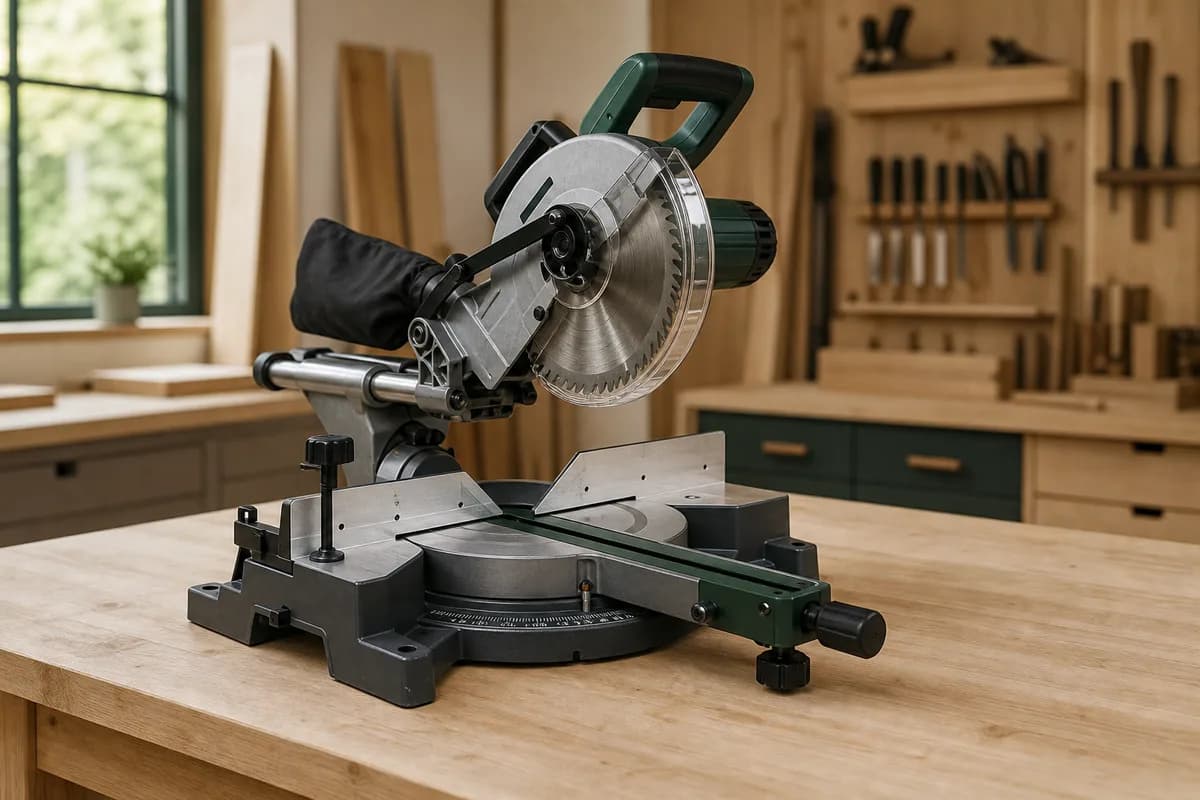
Most readers need a miter saw for wood and a chop saw for metal.
These tools can look similar from across the workshop because both bring a rotating cutter down into stationary material. But their best jobs are different. A miter saw is a woodworking accuracy tool. A chop saw is a cut-off tool for approved tougher material, often metal, with a very different work-holding and debris-control problem.
Miter saw
Best when you need clean crosscuts, trim angles, bevels, crown molding cuts, and repeatable lengths in material the saw and blade are designed to cut.
Open miter saw guideChop saw
Best when the material, wheel or blade, vise, guard, and work area are all suited to controlled metal cutting or other approved cut-off work.
Open chop saw guideThey differ most by material, work holding, and cut quality.
If you only compare motor size or wheel diameter, the decision gets blurry. The cleaner question is: what material are you cutting, how must it be held, and what quality does the finished cut need?
Repeatable crosscuts, trim cuts, miter cuts, bevels, and compound angles in wood or approved similar materials.
Straight, forceful crosscuts in approved metal stock using the wheel or blade specified by the machine.
Wood trim, framing lumber, molding, and other materials allowed by the saw and blade manual.
Metal tube, bar, pipe, angle stock, or other material approved for that exact cut-off machine.
Angled woodworking cuts where repeatability and clean joints matter.
Usually straight or simple angled metal cuts where speed and material control matter more than fine joinery.
Clean visible joints, repeatable lengths, and predictable angle settings.
Controlled separation of tough material; burrs, sparks, and heat can be part of the workflow.
The workpiece sits flat on the table and tight to the fence, with clamping whenever practical.
The workpiece is held in the vise or fixture designed for the saw, especially for metal stock.
Treating it like a general metal cut-off tool or using accessories the saw is not designed to guard.
Treating it like a rough miter saw for woodworking or fitting the wrong wheel or blade type.
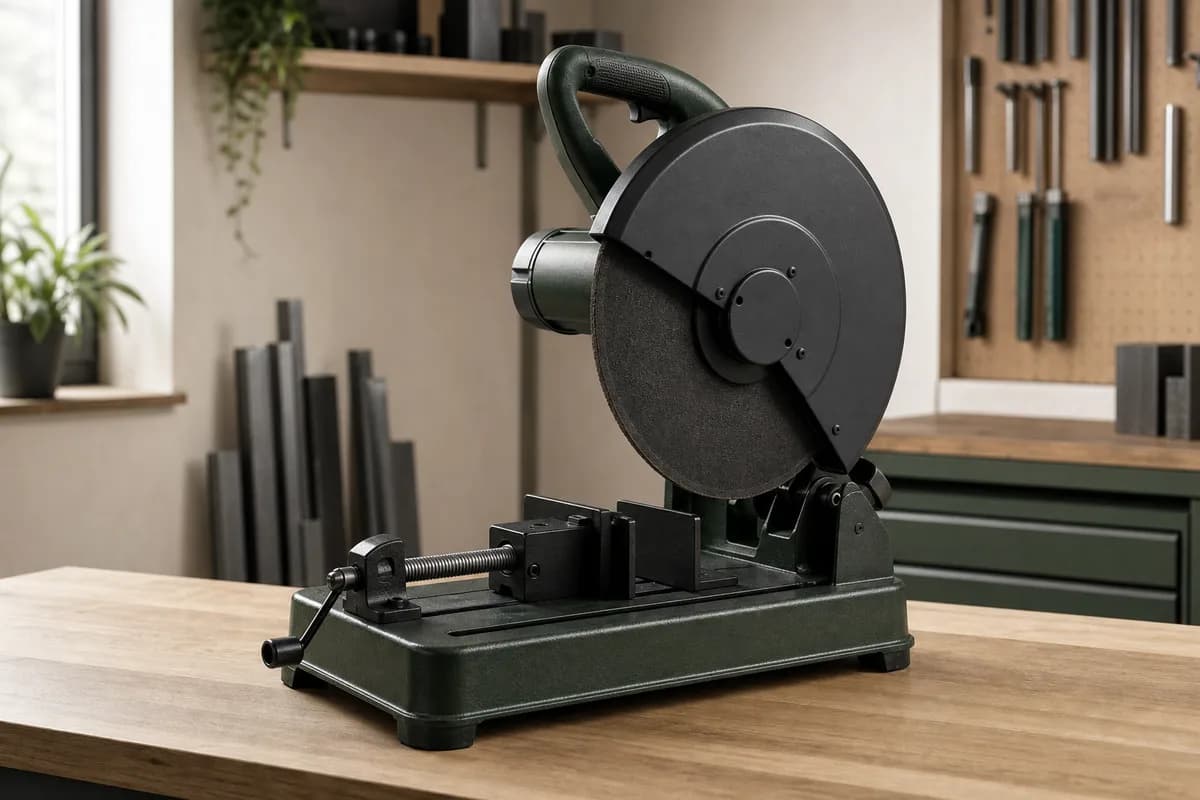
Choose a miter saw if clean repeatable angles matter.
A miter saw makes the most sense when your project lives in the world of boards, trim, molding, frames, shelves, and visible joints. The benefit is not just that it cuts across a board; it lets you repeat that cut with predictable angle settings.
- You are cutting baseboards, casing, crown molding, deck boards, or similar woodworking stock.
- You need repeatable 45-degree corners, bevels, or compound trim angles.
- The finished edge and joint quality matter more than cutting through metal quickly.
- You want a woodworking cut station with stops, supports, and predictable angle adjustments.
Choose a chop saw if the material and machine are made for each other.
A chop saw is not simply a less refined miter saw. For metal cutting, the vise, wheel rating, guard, spark control, and work area are part of the tool choice. If those pieces do not fit, the answer is not to improvise.
- You are cutting approved metal stock and the machine manual supports that material and wheel or blade.
- The saw has a vise or fixture that can hold the workpiece securely through the cut.
- You can manage sparks, hot offcuts, dust, and wheel debris in a suitable work area.
- You care more about controlled metal cut-off work than fine woodworking joinery.
Four mistakes that make this comparison unsafe or expensive.
Buying by name only
Some people use the names loosely. Check the actual manual, guard, wheel or blade type, vise, and approved materials.
Putting the wrong wheel on the wrong saw
A miter saw guard is not automatically appropriate for abrasive cut-off work, and a chop saw may prohibit toothed blades.
Ignoring work holding
A miter saw relies on table-and-fence support; a metal chop saw commonly relies on its vise or special fixture.
Comparing only blade size
A 12-inch miter saw and a 14-inch chop saw solve different problems. Capacity does not make them interchangeable.
Chop saw vs miter saw FAQ
Can I use a chop saw instead of a miter saw?
Usually not for trim or woodworking accuracy. A chop saw is built around forceful cut-off work in approved material, while a miter saw is built around controlled woodworking crosscuts and angles.
Can a miter saw cut metal?
Only if the exact saw, blade, and material are approved by the manufacturer. Do not assume a woodworking miter saw can safely accept an abrasive wheel or cut metal just because the material fits under the blade.
Which one is better for beginners?
For ordinary home trim, shelves, framing lumber, and woodworking projects, a miter saw is the more natural first tool. For metal fabrication or repeated metal cut-off work, a suitable chop saw or metal-cutting saw is the better fit.
Is a chop saw more accurate than a miter saw?
Not for fine woodworking joints. Chop saws are useful for tough cut-off work, but miter saws are designed around repeatable woodworking angles, bevel settings, and cleaner visible joints.
Primary sources, not workshop folklore.
We checked this page against OSHA machine-guarding guidance for miter and chop saws plus manufacturer documentation for a dedicated DeWalt chop saw. The page is intentionally conservative where material, wheel, and guard compatibility depend on the exact model.