Thin kerf vs full kerf miter saw blade
Thin kerf removes less material and can reduce cutting load. Full kerf generally offers a thicker, stiffer plate. The better choice depends on the saw, stock, cut quality, and manufacturer approval.
How this guide has been updated
- Guidance published with safety and manufacturer references.
Share this page
Kerf describes material removed; plate design controls behavior.
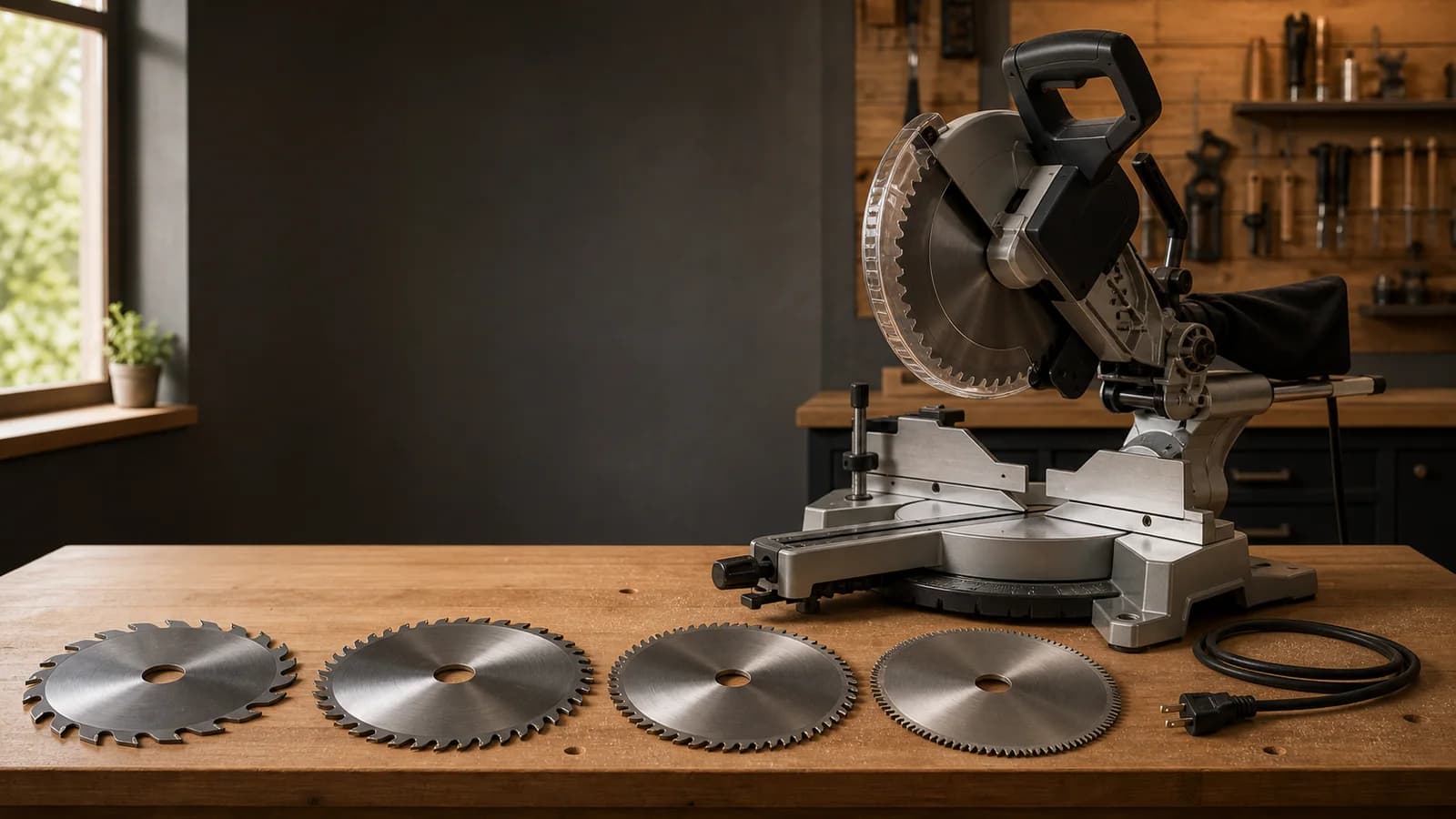
The carbide tips normally project beyond the steel plate and define the cut width. A thin-kerf blade removes a narrower path, which can reduce waste and the energy needed per cut. A full-kerf blade uses a wider cutting path and usually a thicker plate, which can resist bending under side load.
Neither label guarantees quality. Tensioning, tooth geometry, carbide, cleanliness, mounting, and feed technique still determine how straight and smooth the blade cuts. Compare products of similar purpose and quality.
Less
More
Often lower
Often higher
More sensitive to side pressure
Usually greater
Narrower cut
Wider cut
Thin kerf helps when load and yield are real constraints.
A lower-powered or cordless saw may benefit from removing less material, provided the maker permits the plate and kerf. Thin kerf can also preserve a little more expensive stock when many cuts accumulate.
The trade is sensitivity. Let the blade establish the cut without twisting the head, pushing sideways, or allowing long stock to lever off the fence. Use sharp carbide and level supports.
Full kerf favors rigidity in demanding crosscuts.
A thicker plate can be useful in dense stock, taller molding, or repeated cuts where side loading and heat could make a thinner plate wander. The saw still needs adequate power and the blade must fall within all published limits.
Full kerf does not excuse aggressive feeding. If the motor slows, the blade burns, or the stock moves, stop and correct setup or blade condition.
Test repeatability, not one lucky edge.
Make several cuts in representative scrap, alternating ordinary and taller stock if both are part of the job. Check the visible edge, measured length, square, and whether the motor maintains speed without force.
If results drift as the blade warms, inspect alignment, contamination, plate condition, clamping, and feed. A stable process matters more than a single polished sample.
Questions readers ask before they start
Is thin kerf better for cordless miter saws?
It can reduce load, but only use it when the saw maker approves the blade dimensions and the blade is suitable for the material and cut.
Does full kerf cut straighter?
Its thicker plate may resist deflection better, but alignment, support, tooth design, sharpness, and feed still control straightness.
Does kerf affect measurements?
Yes. The cut removes the kerf width, so mark the waste side and align the correct tooth edge with the layout line.
Check the exact saw manual before changing or adjusting anything.
The selection checks below follow OSHA guarding guidance and current manufacturer manuals. Your exact saw and blade instructions remain controlling.