12-inch miter saw blades: capacity without guesswork
The larger blade may unlock useful capacity, but its mass and plate diameter make compatibility, support, feed pressure, and blade condition especially important.
How this guide has been updated
- Guidance published with safety and manufacturer references.
Share this page
A 12-inch blade has to match more than the arbor.
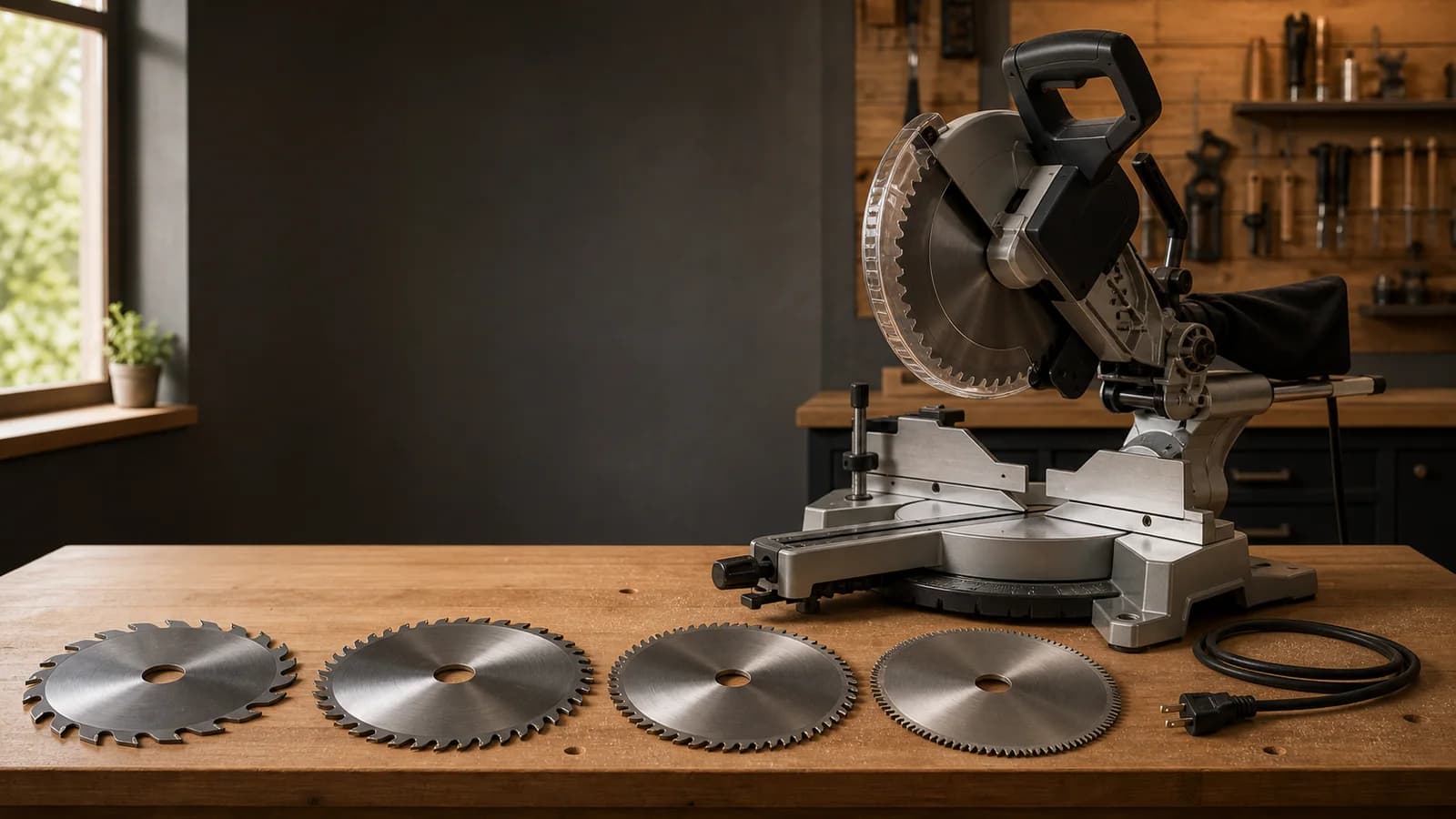
Compare diameter, arbor, maximum RPM, plate thickness, kerf, tooth geometry, and approved material with the saw manual. Larger plates can make damage, poor mounting, or unsuitable thin-kerf designs more consequential, so do not infer approval from a blade merely fitting over the spindle.
Use clean, undamaged original clamping parts. Resin or debris trapped between flange and blade can introduce runout. The blade should seat flat without force, improvised spacers, or hardware that changes the manufacturer’s stack.
- Confirm the saw is designed for a 12-inch blade.
- Check blade speed rating against saw no-load RPM.
- Inspect the plate and carbide before every installation.
- Keep the guard path and fence configuration exactly as instructed.
Match tooth geometry to thickness and visible quality.
Tall molding and wide boards are common reasons to own a 12-inch saw, but they do not all need the same blade. Utility lumber favors chip clearance and reasonable feed speed. Prefinished trim, hardwood molding, and picture-frame stock benefit from a fine crosscut blade when the maker approves the thickness.
A very high tooth count can leave a refined edge in the correct application, yet it can also rub or heat when dirty, dull, or pushed through thick stock. Choose from the blade manufacturer’s use chart rather than treating the largest tooth number as premium.
More open crosscut pattern
Accept a less polished edge
Balanced crosscut blade
Change blades for specialty stock
Fine crosscut blade
Slower controlled feed and clean carbide
Dedicated rated blade
Confirm saw approval first
Extra capacity increases the need for level support.
Long or wide stock can lever against the table if extensions are low, high, or too far away. Set supports level with the saw table and keep the board registered against the fence without bowing. Clamp when the manual or cut geometry calls for it.
Plan the offcut so it cannot fall, pinch, or be trapped between a stop and the blade. A larger saw does not make unsupported material stable; it only gives the blade more reach.
Do not blame tooth count for every rough cut.
Check a rough edge in order: material movement, blade cleanliness, damaged teeth, fence and table alignment, feed pressure, then blade suitability. Burn marks often point to rubbing, contamination, slow feed, or alignment rather than a simple need for more teeth.
If vibration begins, release the trigger, hold the head in the instructed position, wait for a full stop, disconnect power, and inspect. Never steady a vibrating blade by making another cut.
Questions readers ask before they start
How many teeth should a 12-inch finish blade have?
Use the blade maker’s application chart. Fine crosscut blades generally use more teeth, but material thickness, tooth geometry, and feed guidance decide suitability.
Can a 12-inch blade go on a 10-inch saw?
No unless the saw manufacturer explicitly designed and approved that configuration. Guarding, speed, travel, and structure are different.
Why does my 12-inch blade burn wood?
Possible causes include resin buildup, dullness, alignment error, rubbing, excessive or insufficient feed, and a blade unsuited to the stock.
Check the exact saw manual before changing or adjusting anything.
The selection checks below follow OSHA guarding guidance and current manufacturer manuals. Your exact saw and blade instructions remain controlling.