How many teeth for a miter saw blade?
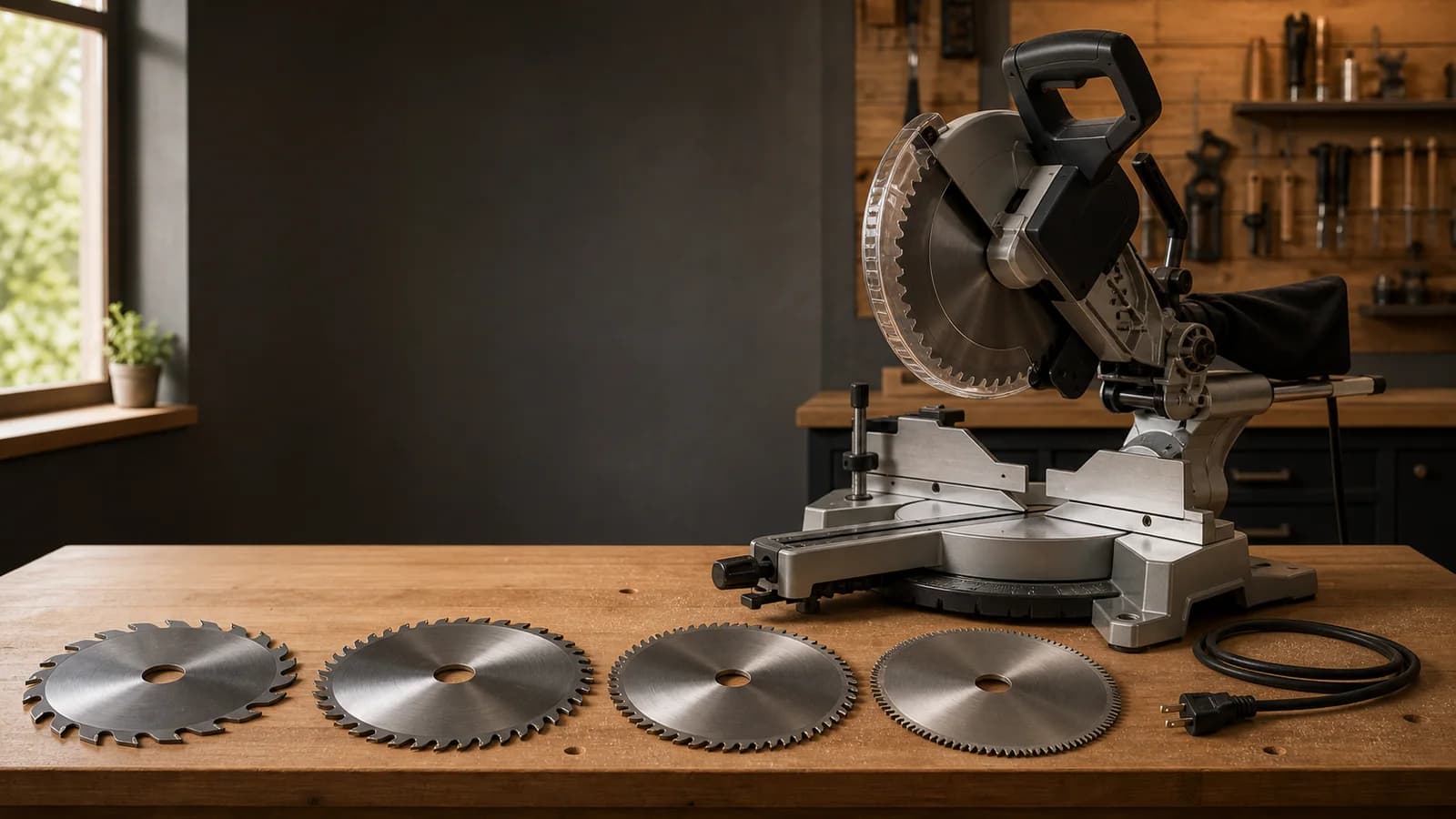
Tooth count is a useful shortcut only after material, thickness, blade diameter, and tooth geometry are known. More teeth usually trade faster chip clearance for a finer crosscut surface.
How this guide has been updated
- Added manufacturer-documented tooth-count examples and their compatibility limits.
- Guidance published with safety and manufacturer references.
Share this page
Tooth count changes bite size and chip space.
At the same diameter, a lower count generally spaces teeth farther apart. Each tooth can take a larger bite and the gullets have more room to carry chips, which suits faster utility cutting. A higher count puts more cutting edges into the work and takes smaller bites, which can reduce visible tooth marks in suitable material.
The trade is not linear. Tooth shape, hook angle, carbide sharpness, plate stability, blade speed, feed pressure, and stock thickness all change the result. Compare blades designed for the same saw type and material before using tooth count as the tie-breaker.
Move from the job toward a tooth range.
Start with a coarse direction for framing or construction lumber where speed and chip removal matter. Move toward a balanced crosscut blade for routine boards and general DIY. Move finer for prefinished trim, molding, hardwood faces, or picture-frame stock when the blade maker includes that thickness and material.
For laminate, plastics, aluminum, or other specialty products, stop using wood-only rules. The correct tooth design and material rating become more important than the count printed in large type.
Lower / more open
Acceptable edge and safe chip clearance
Moderate / balanced
A practical speed-finish compromise
Higher / finer
Heat, cleanliness, and controlled feed
Application-specific
Material rating before the number
Use representative scrap, not a guess on the project piece.
Mount the verified blade with power disconnected, restore the guard, and make a test cut in the same material, thickness, face orientation, and support arrangement. Inspect the face that will remain visible, because exit-side fibers or a delicate coating may behave differently.
If the result is rough, first confirm the stock stayed against the fence and the blade is clean and undamaged. Only then change tooth range. A second blade will not fix movement, misalignment, or unsupported long stock.
More teeth can demand a calmer feed and cleaner blade.
Fine gullets have less room for chips, and resin on the plate or carbide increases friction. Follow the maker’s feed guidance, avoid dwelling in the cut, and clean only by an approved method with the blade removed and power disconnected.
Burning, smoke, abnormal sound, or increasing feed force are stop signals. Release the trigger, wait for a complete stop, disconnect power, and diagnose instead of pushing harder.
Questions readers ask before they start
Are more teeth always better on a miter saw?
No. More teeth can improve finish in suitable stock but may clear chips more slowly and build heat if misapplied, dirty, or forced.
What tooth count should I use for trim?
Choose a fine crosscut blade recommended for the exact trim material and thickness, then test the visible face on scrap.
Does a 12-inch blade need more teeth than a 10-inch blade?
Often equivalent applications use different totals because circumference differs. Compare application and tooth spacing, not totals across diameters.
Check the exact saw manual before changing or adjusting anything.
The selection checks below follow OSHA guarding guidance and current manufacturer manuals. Your exact saw and blade instructions remain controlling.