The Best Cordless Miter Saws
Choose cordless when outlet access or repeated moves slow the job. Compare the complete battery package, measured cut capacity and carrying weight; cordless does not automatically mean smaller or less capable.
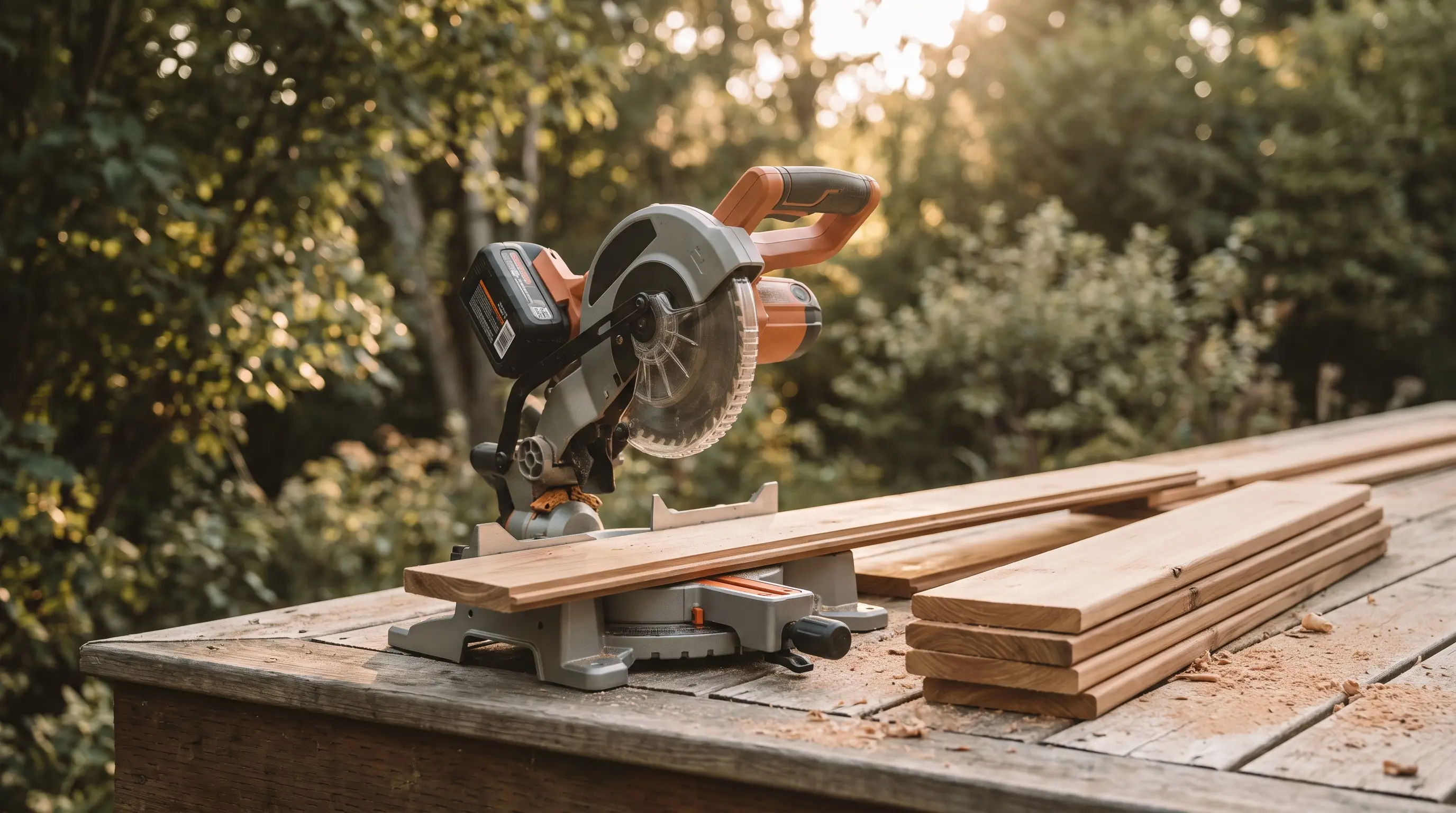
A cordless miter saw earns its place the moment you're cutting somewhere without a convenient outlet—a deck, a roof, a remodel with the power off, or just across the yard. Today's brushless battery saws have closed most of the gap with corded models for trim and framing work. What you're really choosing is a battery platform, a blade size, and how much capacity you need away from the wall.
Be honest about how you'll use it. For a fixed shop where the saw never moves and you cut wide stock all day, a corded 12-inch still gives you more saw for the money. For everyone who values portability, these five are the strongest cordless saws you can buy on Amazon. Check the exact model and battery package against the linked documentation; picks are research-based, not lab-tested.
Cutting in a fixed shop instead? Compare with our best miter saw guide.
How this guide has been updated
- Removed unsupported price/rating comparisons, clarified selection criteria and added a project-fit checklist. Research-based; no new hands-on testing.
Share this page
What does cordless change in your working day?
Use these checks to narrow the shortlist. They explain our selection logic; they are not measured performance scores.
| Your situation | Check before ordering | Avoid this assumption |
|---|---|---|
| Short jobs away from outlets | Documented capacity plus a compatible charged battery | Tool-only means the power package may be an extra purchase. |
| Repeated cuts over a full shift | Battery rotation, charging and material-specific workload | Do not transfer a cuts-per-charge claim to different stock. |
| A permanent workshop station | Outlet access compared with the complete battery system | Cordless convenience is useful only if it solves a real constraint. |
Write down the material, measured dimensions, required angles and available workspace. Check those requirements against each model’s linked documentation before ordering.
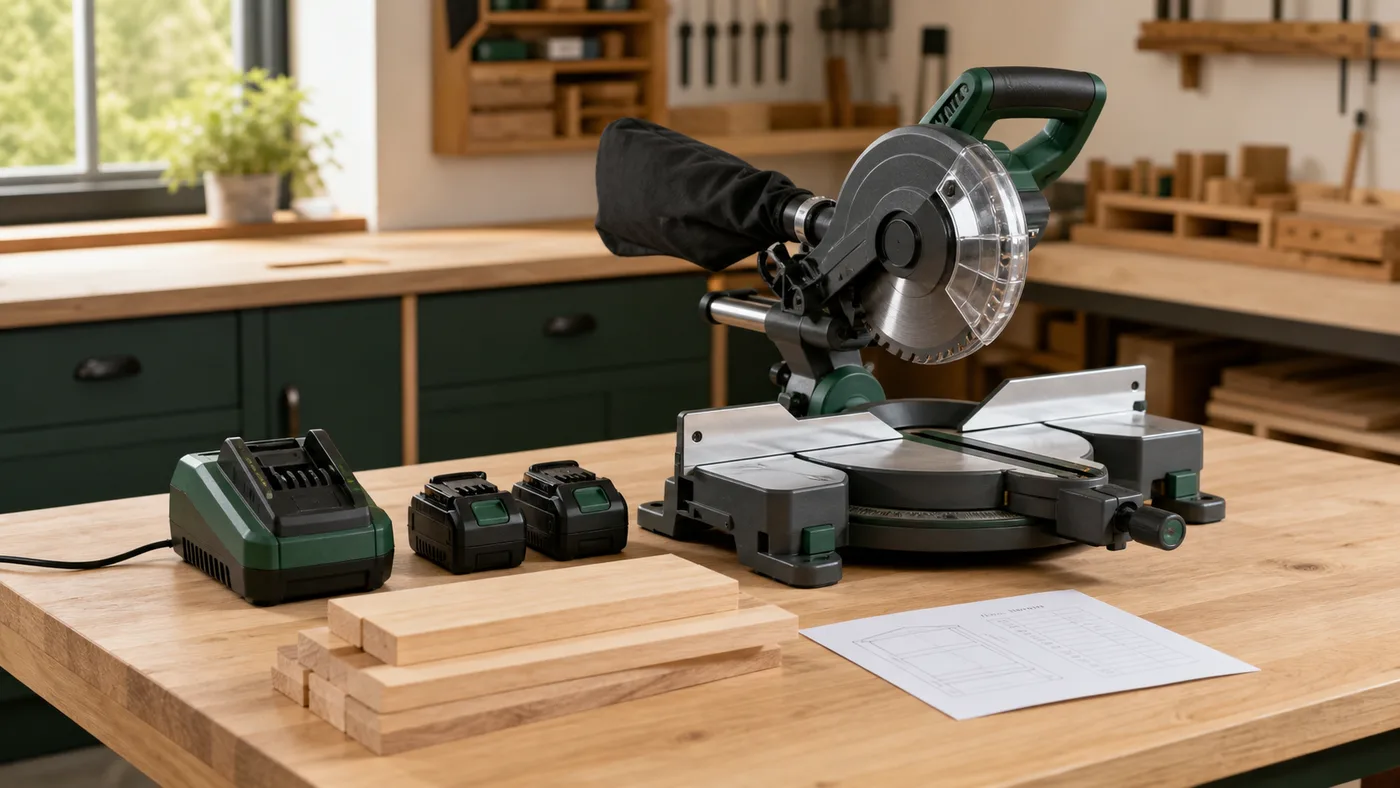
The 5 picks compared
| # | Model | Best for | Blade | Type |
|---|---|---|---|---|
| #1 | DeWalt DCS361B | Best Overall | 7-1/4 in. | 20V MAX sliding |
| #2 | DeWalt DCS785B | Best for Big Cuts | 12 in. | 20V MAX XR dual-bevel sliding |
| #3 | CRAFTSMAN CMCS714M1 | Best Value (Kit) | 7-1/4 in. | V20 sliding (with battery) |
| #4 | Makita XSL05Z | Best Compact | 6-1/2 in. | 18V LXT dual-bevel |
| #5 | RYOBI ONE+ 18V Sliding | Best Budget | 7-1/4 in. | 18V ONE+ sliding |
Best for: Buyers whose trim and dimensional lumber fit the DCS361B capacity chart and who can supply compatible 20V MAX batteries and charging. Runtime depends on the pack, material and workload.
- 7-1/4 in.Blade
- 20V MAX (sold separately)Battery
- Single bevel, slidingBevel
- Blade
- 7-1/4 in.
- Battery
- 20V MAX (sold separately)
- Bevel
- Single bevel, sliding
- Cut at 90°
- 2x8 nominal
Pros
- Uses compatible DeWalt 20V MAX batteries; check your existing packs
- Compact format for transport using the manual-approved carry points and a planned route
- Cuts 2x8 stock at 90°, plenty for trim, decking and framing to length
Cons
- Sold as a bare tool—battery and charger cost extra
- Single bevel and a 7-1/4-inch blade mean less capacity than a corded 12-inch
Best for: Full-size capacity without a cord. A 12-inch dual-bevel slider that cuts crown and wide stock like a corded saw, with a brushless motor and brake—the cordless pick for someone who refuses to give up cut capacity.
- 12 in.Blade
- Dual bevel, slidingBevel
- Brushless with brakeMotor
- Blade
- 12 in.
- Battery
- 20V MAX XR (sold separately)
- Bevel
- Dual bevel, sliding
- Motor
- Brushless with brake
Pros
- Full 12-inch capacity—handles crown and wide trim like a corded saw
- Dual bevel tilts both ways for inside and outside corners without flipping
- Brushless motor and electric brake for runtime and safety
- Runs on the same 20V MAX batteries as the rest of the DeWalt lineup
Cons
- Heaviest cordless saw here—the trade-off for 12-inch capacity
- Bare tool, and high-capacity batteries are needed to get real runtime
Best for: Buyers comparing a CMCS714M1 kit with tool-only alternatives. Verify that the selected package includes the specified V20 battery and charger; support, extraction and blade needs still add to the working setup.
- 7-1/4 in.Blade
- V20 4Ah + charger includedBattery
- Single bevel, slidingBevel
- Blade
- 7-1/4 in.
- Battery
- V20 4Ah + charger included
- Bevel
- Single bevel, sliding
Pros
- Comes with a battery and charger—no hidden extra cost like bare tools
- Kit format lets you compare the saw, compatible battery and charger together
- Light and easy for trim, crafts and around-the-house cuts
Cons
- CRAFTSMAN's V20 platform is smaller than DeWalt's or Makita's
- 7-1/4-inch single-bevel limits it to lighter, narrower stock
Best for: Makita LXT users cutting stock within the compact XSL05Z capacity. The documented configuration has a brushless motor, dual bevel and laser; do not infer wireless dust-extractor control from another Makita model.
- 6-1/2 in.Blade
- 18V LXT (sold separately)Battery
- Dual bevel, compoundBevel
- Blade
- 6-1/2 in.
- Battery
- 18V LXT (sold separately)
- Bevel
- Dual bevel, compound
- Features
- Brushless motor, laser guide
Pros
- Very light and compact—easy to carry and store
- Dual bevel provides adjustment in both directions; check alignment independently of the laser
- Brushless motor and Automatic Speed Change; these do not establish dust-capture performance
Cons
- Premium price, and it's a bare tool (no battery)
- 6-1/2-inch blade is the smallest here—best for trim, not wide stock
Best for: DIYers already in the ONE+ system. A compact slider on the RYOBI ONE+ 18V battery platform—ideal for occasional trim and project cuts around the house.
- 7-1/4 in.Blade
- 18V ONE+ (sold separately)Battery
- Compound, slidingBevel
- Blade
- 7-1/4 in.
- Battery
- 18V ONE+ (sold separately)
- Bevel
- Compound, sliding
Pros
- One of the lowest prices for a brand-name cordless slider
- Shares the enormous RYOBI ONE+ 18V battery ecosystem
- Sliding action handles wider boards than a fixed compact saw
- Plenty of saw for DIY trim, crafts and weekend projects
Cons
- Built for DIY, not the daily abuse of a jobsite
- Check the package for battery and charger; voltage alone does not establish runtime
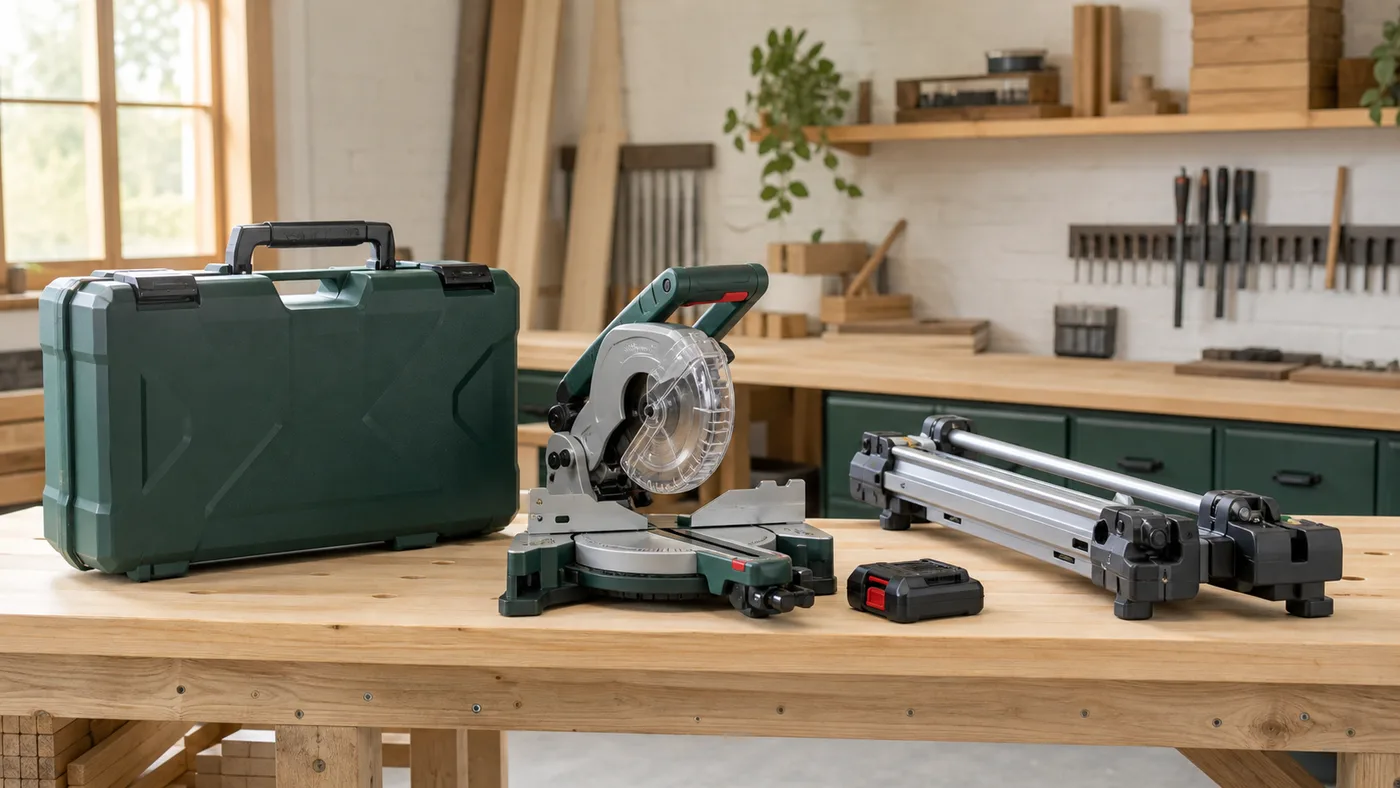
What separates a good pick from the rest.
Battery platform
The most important decision. A cordless saw ties you to a battery system, so the smart move is to match the saw to the batteries you already own—DeWalt 20V MAX, Makita 18V LXT, CRAFTSMAN V20 or RYOBI ONE+. Buying into a new platform means buying batteries and a charger too.
Cut capacity
Blade size and slide decide what you can cut. A 6-1/2- or 7-1/4-inch saw handles trim and framing lumber to length; only a 12-inch like the DCS785B matches a corded saw for crown and wide boards. Check the 90-degree and bevel cut specs against the stock you actually cut.
Runtime and motor
Compare the exact motor specification rather than assuming every cordless saw is brushless. Runtime depends on battery energy, material, blade, temperature and workload. Use approved packs and plan charging; a capacity label does not guarantee a full day.
Weight and portability
The whole point of cordless is mobility. Lighter 6-1/2 and 7-1/4-inch saws are easy to carry up a ladder; the 12-inch trades that for capacity. Think about how often you'll lift and reposition it before chasing the biggest blade.
Tool-only vs kit value
Most cordless saws sell as a bare tool, so the sticker price isn't the real price once you add a battery and charger. A complete kit like the CRAFTSMAN can be cheaper all-in than a 'cheaper' bare tool you have to feed with batteries.
Frequently asked questions
Who makes the best cordless miter saw?
It depends on your battery platform. DeWalt's 20V MAX saws (the DCS361 and 12-inch DCS785) are the best-rounded and most widely owned on Amazon. Makita's 18V LXT saws are prized for compact precision. CRAFTSMAN and RYOBI cover value and DIY. The best one for you is usually whichever matches batteries you already have—the saw itself matters less than the ecosystem.
Is a cordless miter saw worth it?
If you ever cut away from an outlet, yes. Cordless saws let you work on a deck, a roof, or a powered-down remodel with no cord to trip over or run, and modern brushless models have plenty of power for trim and framing. For a stationary shop where the saw never moves and you cut wide stock all day, a corded saw still gives more capacity for the money.
Are cordless miter saws as powerful as corded?
For most cuts, modern brushless cordless saws are close enough that you won't notice—they crosscut framing lumber and trim cleanly. The gap shows up in sustained heavy use and in capacity: the biggest cordless 12-inch saws match corded ones, but smaller 7-1/4-inch models cut less in a pass. For all-day production cutting of wide hardwood, corded still has the edge.
Do cordless miter saws come with a battery?
Usually not. Most cordless miter saws are sold as a 'bare tool,' meaning the battery and charger cost extra—important when you compare prices. A few ship as a complete kit: the CRAFTSMAN CMCS714M1, for example, includes a V20 battery and charger, so its price is the all-in price. Always check whether a listing is tool-only or a kit.
Is a Milwaukee or DeWalt cordless miter saw better?
Both make excellent cordless saws—Milwaukee's M18 FUEL sliders are jobsite favorites. The practical catch is availability: Milwaukee restricts third-party Amazon sales, so if you're buying on Amazon, DeWalt's 20V MAX saws are the easiest premium option to actually get. If you already run M18 batteries and can buy locally, Milwaukee is well worth considering too.