Disconnect first, then narrow the fault
Describe the symptom, isolate every power source, and perform only checks the exact manual calls user-serviceable. Review the safe stop sequence before diagnosis.
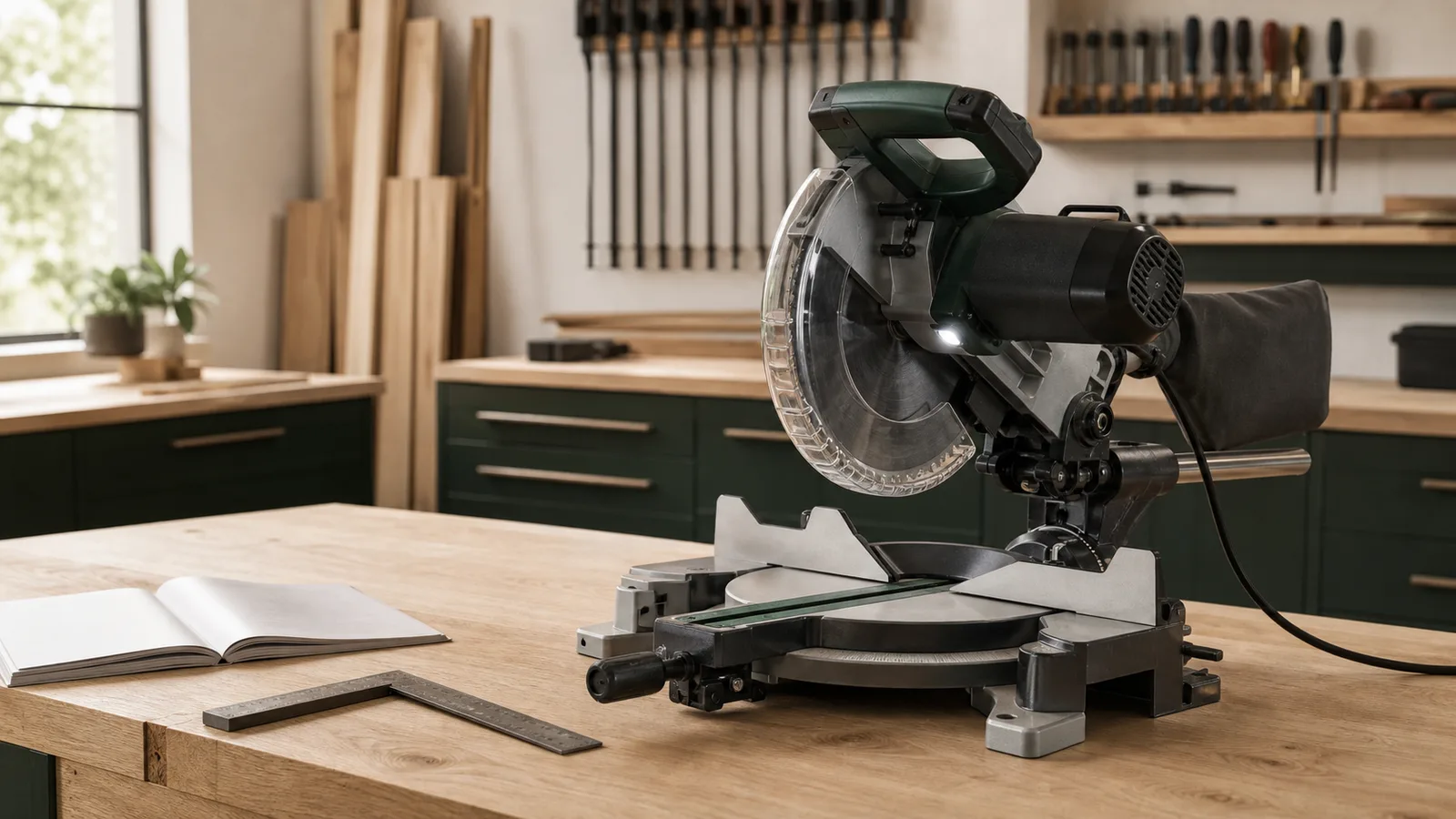
A symptom is not permission to bypass protection.
Power, locks, blade mounting, guards, switches, brakes, brushes, and motor controls interact. The diagnostic process stops where the manufacturer’s service boundary begins.
- Manual-first safety
- Specific setup decisions
- No invented testing
Choose the question that matches your setup.
Each guide resolves one distinct decision, then links naturally to the next check in the same workflow.
Miter saw brake not working: stop using it before diagnosis
Diagnose a slow or intermittent miter saw electric brake using manual-approved power, switch, blade, brush, and authorized-service checks.
Read the guide 02Miter saw blade not spinning: diagnose without bypassing safeguards
Troubleshoot a miter saw blade that will not spin by isolating power, battery, lock, trigger, guard, obstruction, blade mounting, brushes, and service limits safely.
Read the guide 03Miter saw not cutting square: find the axis that moved
Diagnose a miter saw that is not cutting square by separating miter, bevel, blade, fence, table, support, stock, clamping, and feed errors safely.
Read the guide 04Miter saw blade wobble: stop before the next cut
Diagnose miter saw blade wobble by checking blade damage, arbor fit, flange cleanliness, mounting order, runout, bearings, vibration, and service boundaries.
Read the guide 05Miter saw smoking: stop and identify the source
Diagnose smoke from a miter saw by distinguishing burning wood, resin friction, a stalled blade, motor or brush faults, wiring damage, dust buildup, and fire risk.
Read the guide