Strong fit
What it does well
- Breaking down sheet goods
- Framing lumber
- Portable jobsite work
- Straight cuts with a suitable guide
A circular saw travels through the workpiece. It is a flexible choice for framing, sheet goods, and jobs where bringing the material to a fixed machine is impractical.
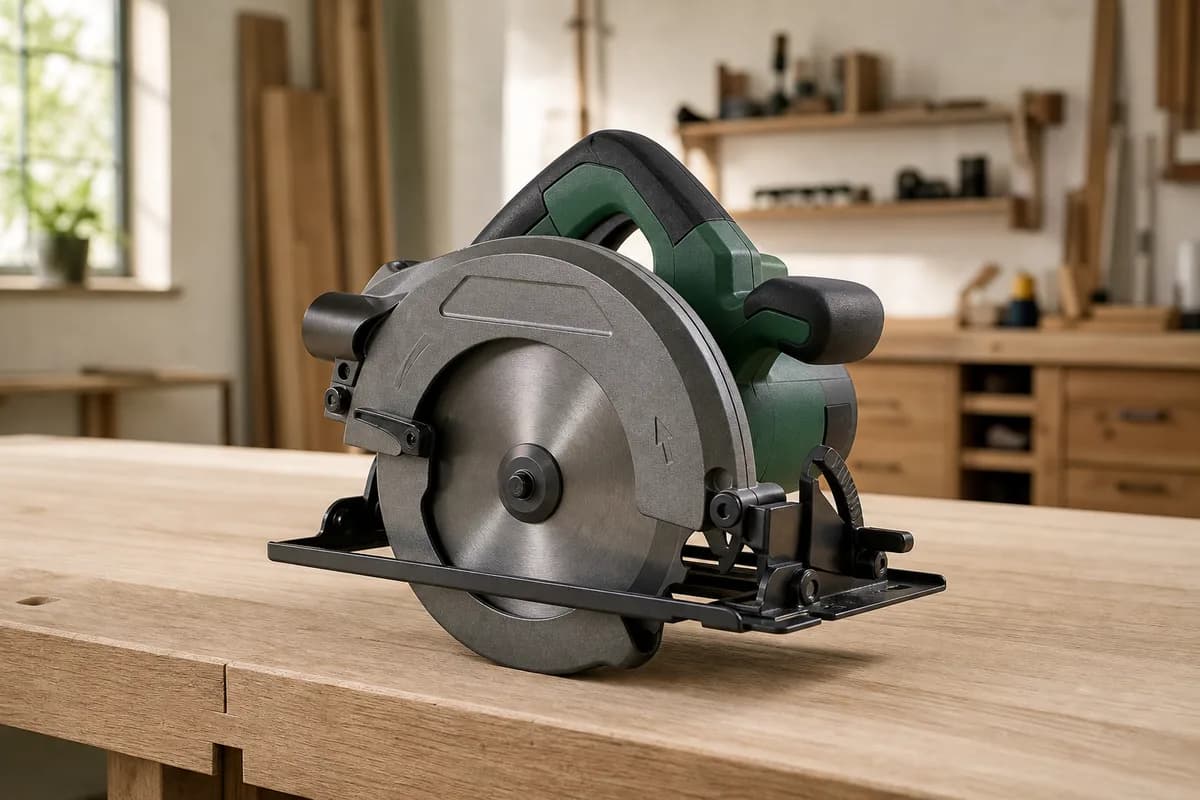
A handheld circular saw can crosscut or rip suitable stock. The machine travels through the work, so the guide, support and clear cutting path become part of the system. This is useful for large panels that are awkward to lift onto a small stationary saw.
Blade diameter is only a starting point. Check the depth available at the intended bevel, how a guide affects the setup, and whether the saw and blade approve the material. Battery compatibility matters if you move between work areas, but it does not replace a capacity check.
| Your task | Useful arrangement | Main limitation |
|---|---|---|
| Break down a large panel | Supported panel and compatible straight guide | Space for the tool, offcut and cord or battery |
| Make repeated trim miters | A fixed miter-saw station may simplify referencing | A handheld cut needs a repeatable guide setup |
| Cut thicker stock at a bevel | Check the documented bevel cutting depth | Square-cut depth is not the bevel capacity |
For one cabinet side, bringing a guided saw to the supported sheet can be more practical than carrying the sheet through a compact table saw. For twenty equal trim pieces, the repeated guide placement may outweigh the circular saw’s portability. Compare the entire sequence of measuring, supporting and positioning, not just the motor.
Plan where both sides of the cut will rest and keep the path clear of people and hidden obstructions. The upper and retracting lower guards are part of the machine’s protection; do not defeat them to make a guide fit. Consult the exact manual for the support and cutting procedure.
For the safety context, see OSHA: handheld circular saws and guards and the exact machine manual.
Share this page
Will you cut mostly boards or sheet goods?
How important are cordless portability and battery compatibility?
Do you need a track or straightedge guide?
What depth of cut does your stock require?