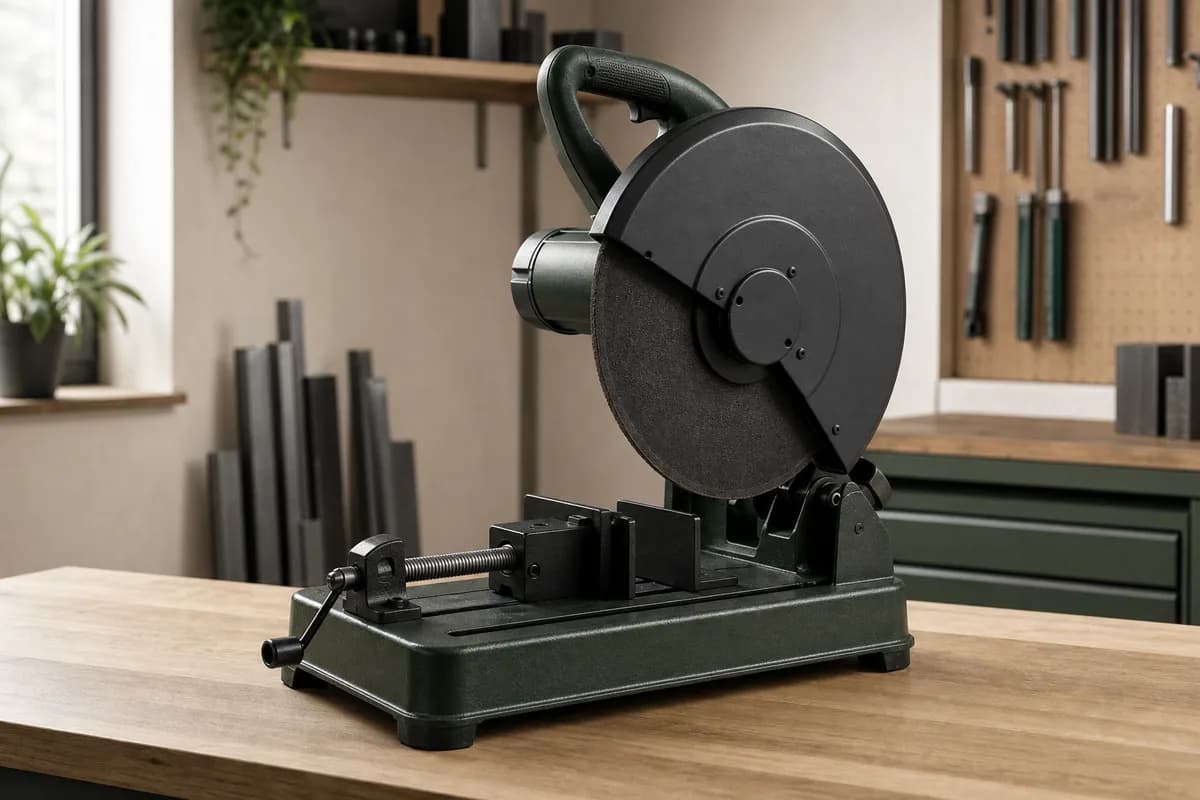
Strong fit
What it does well
- Suitable metal tube, bar, and sections
- Straight repetitive crosscuts
- Fabrication work with the correct wheel or blade
- A dedicated spark-safe work area
People sometimes call a woodworking miter saw a chop saw. Product listings also use the term for machines intended to crosscut metal. Identify the exact machine, cutting medium and approved materials before comparing products. Similar-looking hinged heads do not make the machines interchangeable.
An abrasive-wheel metal saw and a toothed-blade metal saw have different blade or wheel requirements and operating instructions. Do not transfer accessory sizes or speeds from one to the other. A woodworking saw fitted with a metal-labelled blade is not automatically an approved metal-cutting system.
| Job description | Category to investigate | Decision to verify |
|---|---|---|
| Repeat cuts in metal tube or bar | A machine explicitly approved for that material | Section shape, clamping capacity and cutting medium |
| Fit wooden trim around a room | Woodworking miter saw | Angles, finish and profile capacity |
| Occasional mixed-material repairs | Choose a documented process for each material | No assumed all-material blade conversion |
Treat the steel supports and wooden shelves as separate cutting jobs. The metal task needs its own approved machine configuration and work area. The timber task needs an appropriate crosscut or ripping method. Buying one saw because both jobs involve a straight line overlooks how the material is secured and how debris is controlled.
Before purchase, find the model number, manual, approved accessory specification and stated material range. If these are missing from a second-hand listing, resolve that uncertainty before operating the machine. This category guide helps identify the right questions; it is not a conversion procedure.
For the safety context, see OSHA: saw types and machine guarding and the exact machine manual.
Share this page
Which materials does the exact machine approve?
Does it use an abrasive wheel or toothed metal-cutting blade?
How will sparks and hot offcuts be controlled?
What clamping capacity does your stock require?