Choose the miter saw architecture that fits the work
Measure capacity, footprint, transport, power access, and blade supply together. Then use the complete buying checklist to verify a specific model.
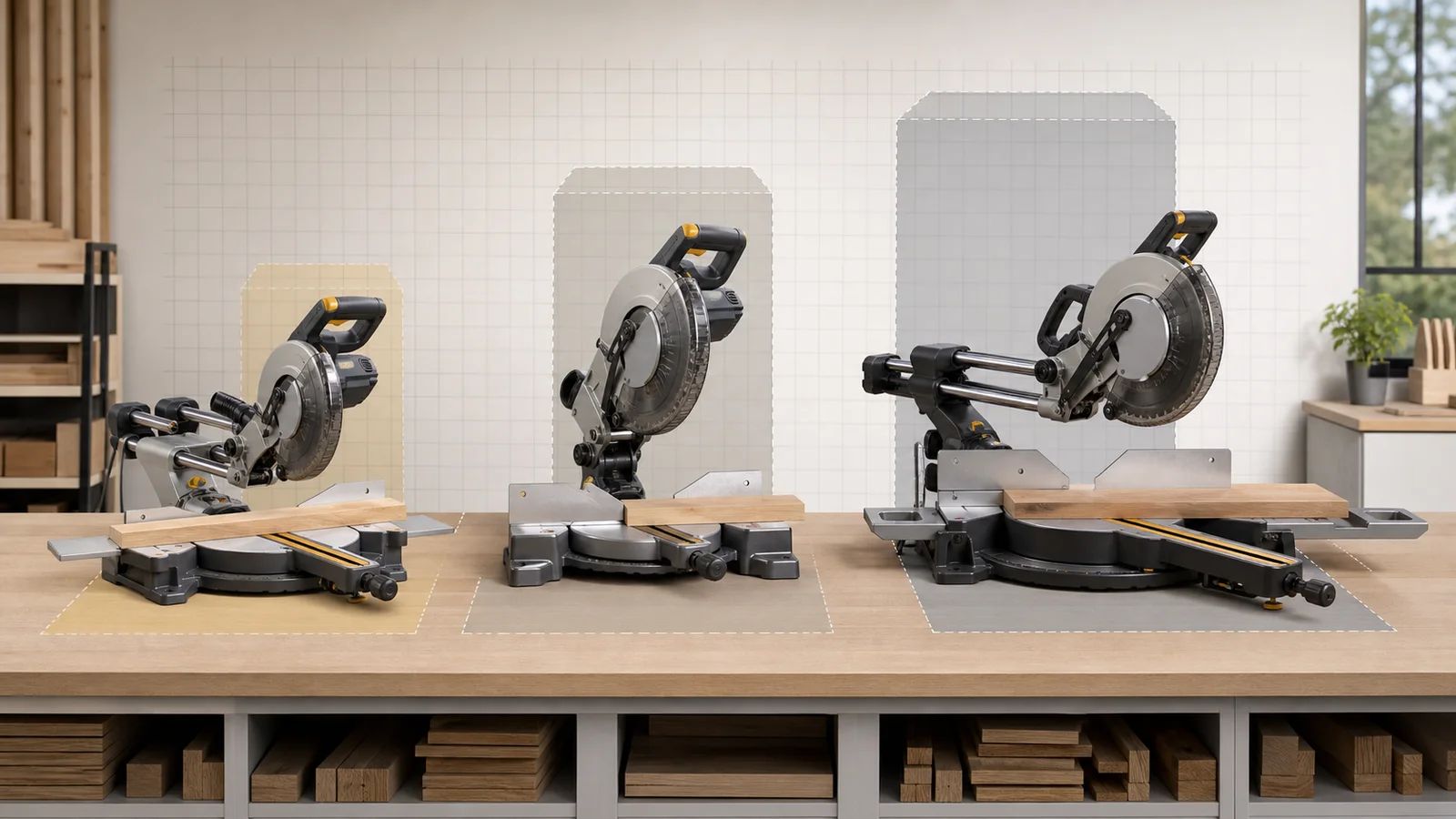
A feature matters only when it improves your recurring workflow.
Blade diameter, slide geometry, power source, weight, controls, support, extraction, and replacement supply form one system. Compare exact manuals and cut lists, not category labels alone.
- Manual-first safety
- Specific setup decisions
- No invented testing
Choose the question that matches your setup.
Each guide resolves one distinct decision, then links naturally to the next check in the same workflow.
Compact miter saw: buy the smallest system that clears your work
Choose a compact miter saw by verified cut capacity, rail or glide footprint, blade size, weight, power source, bevel range, support needs, and storage clearance.
Read the guide 027-1/4-inch miter saw: portable capacity with clear limits
Decide whether a 7-1/4-inch miter saw fits your trim, framing, flooring, portability, battery, blade availability, bevel, and crosscut-capacity needs.
Read the guide 038-1/2-inch miter saw: a middle size that needs a reason
Evaluate an 8-1/2-inch miter saw by capacity, footprint, weight, blade availability, trim fit, slide geometry, power source, and support requirements.
Read the guide 04Miter box vs miter saw: hand control or powered speed?
Compare a manual miter box and powered miter saw by cut capacity, noise, dust, speed, finish, portability, small-stock control, cost, and safe project fit.
Read the guide